
Furniture Movers Guide: How to Choose and Prepare
Furniture movers are professional teams who pack, lift, transport and reassemble your furniture so nothing gets damaged and nobody gets hurt. To choose the right ones in London, check for insurance, ask for an in-person survey, get a written quote and make sure they have handled tight stairs and awkward access before. This guide walks you through each step, then shows you how to prepare so moving day feels calm rather than chaotic.
What Do Furniture Movers Actually Do?
Furniture movers do far more than carry sofas down the stairs. A good team protects your belongings and your building, plans the route, and handles the heavy, awkward or fragile pieces that most of us would rather not wrestle with ourselves.
Typically, the work covers:
Wrapping and protecting furniture with blankets, covers and corner guards
Dismantling and reassembling beds, wardrobes, tables and shelving
Loading and securing items in the van so they don't shift in transit
Carrying pieces through narrow hallways, tight stairwells and lifts
Placing furniture in the right rooms at the other end
In London, the carrying part matters more than most people expect. Victorian terraces with steep, narrow staircases, flats with no lift and streets with limited parking all change how a move is planned. If you are weighing up a smaller job, our guide to moving a few items of furniture in London is a useful place to start.
How Do You Move a Heavy Piece of Furniture?
The safest way to move a heavy piece of furniture is to empty it, plan the route first, use a second person and use equipment such as sliders or a trolley rather than brute strength. Rushing or lifting alone is how backs and banisters get damaged.
Here is a sensible order of play:
Empty the piece completely. Drawers, shelves and cupboards add weight and can shift.
Measure the item and every doorway, turn and stairwell on the route. Write the numbers down.
Remove doors, legs and drawers where you can, and keep the screws in labelled bags.
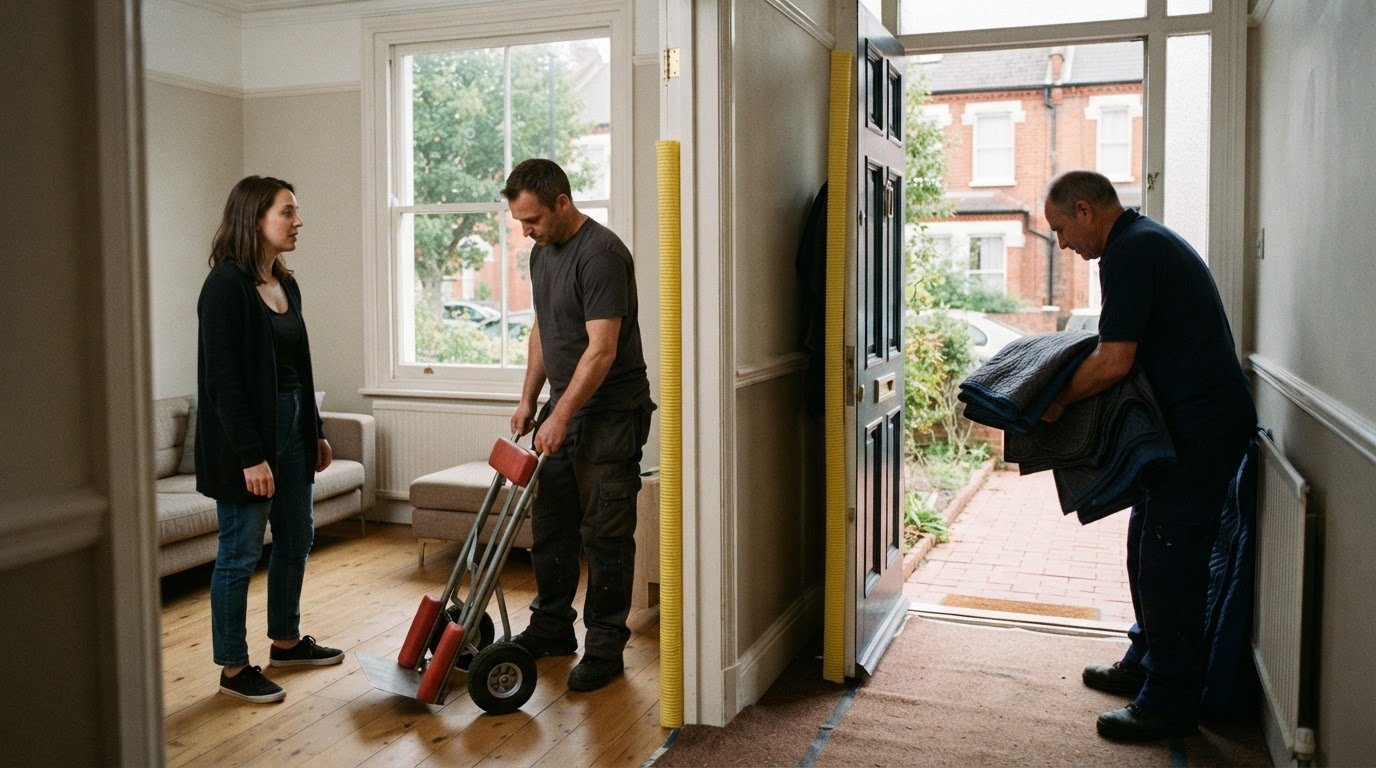
Protect the floor and walls with blankets, cardboard or door-frame guards.
Use furniture sliders or a trolley for flat ground, and always push rather than drag.
Lift with your legs, keep the load close and never twist while carrying.
Health and safety guidance backs this up. OSHA recommends minimising the weight, range of motion and frequency of material-handling tasks, and using carts for horizontal movement where possible. Its heavy-lifting advice is to limit manual lifts to 50 pounds (about 23kg) and use two or more people for anything heavier. A fully loaded wardrobe or a solid oak dresser is well beyond that, which is exactly why many Londoners hand it over to a trained team.
For bulky or specialist pieces, our guide to heavy furniture movers in London explains how professionals approach them.
How Do You Choose the Right Furniture Movers?
Choose furniture movers by checking their insurance, asking for an in-person survey, comparing written quotes and reading recent independent reviews. A company that does all four is far less likely to leave you with surprises on the day.
Here is what we would look for, and what to ask:
Insurance and Liability
Ask exactly what is covered if something is damaged and whether cover is included in the price or charged separately. Some firms add insurance as an optional extra, which can leave you exposed if you say no to save a few pounds. If something does go wrong, it helps to know the process in advance, and our guide on how to claim for damaged furniture after a move shows what to expect.
An In-Person Survey
A quote based only on a quick phone call is a guess. Guidance from the US regulator FMCSA says that for an interstate move you should get written estimates from several movers, and that estimates should be based on an in-person inspection of household goods. That rule applies to American long-distance moves rather than UK ones, but the principle travels well: someone who has actually seen your stairs, your parking situation and your furniture can price the job honestly.
Reviews and Real Examples
Look for recent reviews on an independent platform and read the detail, not just the star rating. Specifics about timing, care and communication tell you far more than a general "great service".
Warning Signs
Be cautious of very low quotes that rise on the day, demands for large cash deposits, no company address, and vague answers about insurance. The US Department of Transportation's Inspector General lists warning signs of household goods moving fraud and steps for checking a company, and much of it applies anywhere. Consumer Action's moving-company FAQ is also helpful, covering documents to request and in-home estimates.
Whichever firm you pick, it is worth knowing what happens if things don't go to plan. We have written about what to do if movers are late and what to do if they don't turn up, so you can feel prepared.
How Much Are Packers and Movers in the UK?
The cost of packers and movers in the UK depends on the volume of belongings, the distance, the access at both ends, and how much packing you want done for you. There is no single fixed price, so be wary of anyone who quotes a flat figure without seeing your home or office.
These are the main things that move the price up or down:
Size of the move: a studio flat is very different from a four-bedroom house
Access: stairs without a lift, long carries from the van and restricted parking all add time
Packing: a full packing service costs more than moving boxes you pack yourself
Dismantling and reassembly: some firms charge extra, others include it
Timing: weekends and month-end are busier
Storage: short-term or longer-term storage adds to the total
When you compare quotes, compare what is included, not just the headline figure. Ask whether insurance, assembly and packing materials are in the price or added later.
What Should You Look for in London Specifically?
London furniture movers should be comfortable with narrow stairs, no-lift buildings, parking restrictions and tight timings. Local experience is not a bonus here, it is a practical necessity.
A few London realities to raise when you get a quote:
Parking and loading: ask whether the team will arrange a parking suspension or loading permit where needed
Stairs and landings: mention the number of flights and any tight turns
Lifts: many blocks have booking slots and size limits, so tell the movers early
Neighbours and building rules: some buildings restrict move times or require deposits
Moving across the capital or into a specific area is easier with local knowledge. For example, we have written about removals in Finsbury Park and local moving support in Shoreditch, both of which show how access shapes the plan.
How Do You Prepare Your Home for Furniture Movers?
Prepare for furniture movers by decluttering first, clearing pathways, labelling everything and telling the team about any access issues in advance. A well-prepared home can make the whole move faster, which usually means a smoother day for everyone.
Two to Three Weeks Before
Sort what you really need. Furniture you no longer want is easier to deal with before moving day than after it.
Measure your large pieces and the rooms they are going into. It is a small job that prevents the heartbreak of a sofa that won't fit through the new front door.
The Week Before
Confirm your booking, arrival window and parking arrangements
Empty drawers, wardrobes and cabinets of loose items
Pack boxes room by room and label them clearly
Take photos of how electronics are plugged in, and of any existing marks or damage on furniture
Arrange for items such as shutters, blinds or shelving to be removed if they are staying with you
The Day Before
Clear hallways, stairs and entrances. Defrost the freezer if it is going with you, and keep valuables, documents and chargers in a bag that travels with you, not on the van.
Which Items Need Extra Care?
Some pieces need specialist handling because they are heavy, fragile or awkward in shape. Telling your movers about these in advance means the right people and equipment turn up on the day.
Common examples include:
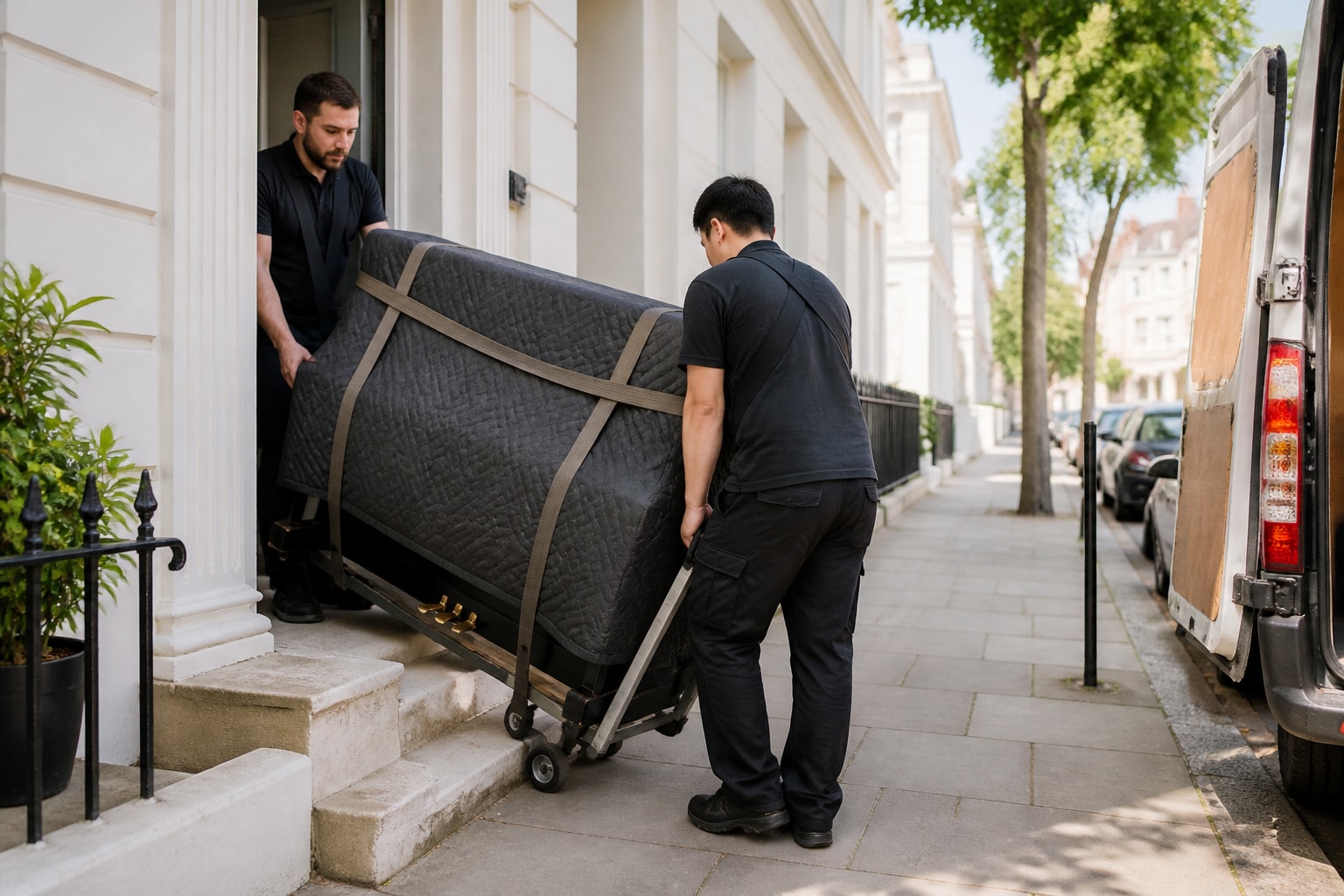
Pianos: very heavy, easily damaged and awkward on stairs
Pool tables and large dining tables: these often need dismantling and careful reassembly
Glass, mirrors and artwork: these need padded, upright transport
Antiques and solid wood pieces: these need extra wrapping and slow, careful carrying
Large wardrobes and sofas: these may need doors or legs removed to get through London doorways
What About Office and Business Furniture?
Moving office furniture is mostly about planning around your working hours. The goal is to keep disruption to a minimum, so your team can pack up on a Friday and be productive again on Monday.
Small and medium businesses should think about:
Timing: evenings and weekends reduce downtime
Labelling: desks, chairs and cabinets marked with the new floor plan position
IT and cabling: photograph the setup before disconnecting anything
Access: lift bookings, loading bay slots and building management rules
Storage: somewhere secure for items that won't fit straight away
A pre-move survey is especially helpful for offices, because the movers can see the layout, lifts and furniture for themselves.
How Can Lets Move London Help?
If you want a team that handles the packing, transport and reassembly together, our house removals service covers flats and houses across London, with optional storage if your dates don't line up. We have been moving Londoners since 2013. Please check our current terms for insurance cover and any charges for assembly, disassembly or packing before you book.
A few details that may help you decide:
A home survey before house or office moves, so the quote reflects your real access and furniture
Quotes that give you time to compare and decide
Secure storage monitored by 24/7 CCTV if you need somewhere for your belongings between homes
Experience with awkward pieces: we have safely relocated pianos, including many over the years
Recent customers have noted the pace of the work on Checkatrade, including one review of a 2-bedroom flat being packed, moved and unpacked in just over two hours, and another describing two movers completing a move in just over four hours.
To be upfront, we are not the right fit if you only need a single item carried with no packing or planning, or if you are moving paint, gas bottles, animals, plants or flammable goods.
FAQ
What are the best furniture companies in the UK?
That depends on whether you mean companies that sell furniture or companies that move it, so it is worth being clear on your goal first. If you want movers, judge them by insurance, an in-person survey, written quotes and recent independent reviews rather than by name alone.
Do I need to be home while the furniture movers work?
It is best to be there at the start to walk the team through the rooms, and again at the end to check everything is in the right place. If you can't be there, nominate someone you trust and give the movers clear written instructions.
Should I take furniture apart before the movers arrive?
Usually you don't need to, as professional teams can dismantle and reassemble most items. Check with your movers first, and ask whether this is included in the quote so there are no surprises.
How far in advance should I book furniture movers in London?
Booking a few weeks ahead is sensible, and earlier still for weekends and month-end when demand rises. If your move is urgent, ask about availability anyway, as last-minute slots do sometimes open up.
Your next step is simple: measure your largest pieces and the doorways and stairs they have to pass through, then write down anything awkward so you can mention it when you ask for quotes. If you would like a team to take care of the packing, lifting and reassembly, our house removals service is built for exactly that kind of London move. We offer a home survey, so you can get a quote from Lets move london and plan your move without any pressure.

Comments