
Unpacking Services in London: How Much Does Home Unpacking Cost
The cost of unpacking services in London isn’t determined by box count alone. There’s no single price for every home: the cost depends on how much needs unpacking, where belongings need to go and the scope of the work. A price is provided after a quote request, once these details are understood.
It’s reasonable to want a clear picture of what you’re paying for before settling in. This guide explains what professional unpacking can involve, how belongings are placed and which factors affect the cost. You’ll also learn what information helps define the work, so you can understand what to expect.
Table of Contents
Professional unpacking and home organisation
Professional unpacking services in London can involve more than opening cartons. A team can unpack belongings, group them in agreed home zones and place items where they’ll be used. For example, kitchen equipment can go near its usual work area, while bedroom clothes and bedding are grouped for easy access. The scope should distinguish unpacking from organising: unpacking removes items from boxes, while organising also considers how each space will function.
Which London companies offer unpacking after a house move? Removal and home-organising companies may provide it as a separate service or as part of a wider move. The scope can vary, so check whether the work includes arranging belongings in rooms, rather than simply emptying boxes.
Before the team arrives, prepare the home for placement: identify the purpose of each room and share clear instructions about priorities. A room plan can show that everyday crockery belongs in accessible kitchen cupboards, while seasonal items go into storage. Flag fragile, valuable or private belongings that need special handling. These decisions give the team a practical brief and reduce uncertainty during the work.
Are unpacking services insured, and what happens if an item is damaged? Insurance arrangements and claims procedures vary between companies, so the service agreement determines what cover applies and how damage is reported. An inventory or record of an item’s condition can help establish what happened. Ask for the relevant process in writing before work starts.
Book once your move date and access to the new home are clear. The amount to unpack, number of rooms and requested organisation all shape the work, so planning early gives the provider time to define the scope. Availability depends on the schedule and the work involved, not on a universal booking window.
Experience matters in practical decisions: placing frequently used items within reach, grouping related belongings and keeping bedroom essentials accessible. Training varies, so consider how an organiser plans spaces and communicates placement. Follow-up visits can refine a layout as routines emerge. In one London home, an organised pantry and breakfast area continued to bring joy two months after the move, showing how thoughtful organisation can serve a household well beyond unpacking day.
Placement of belongings and packaging-rubbish disposal
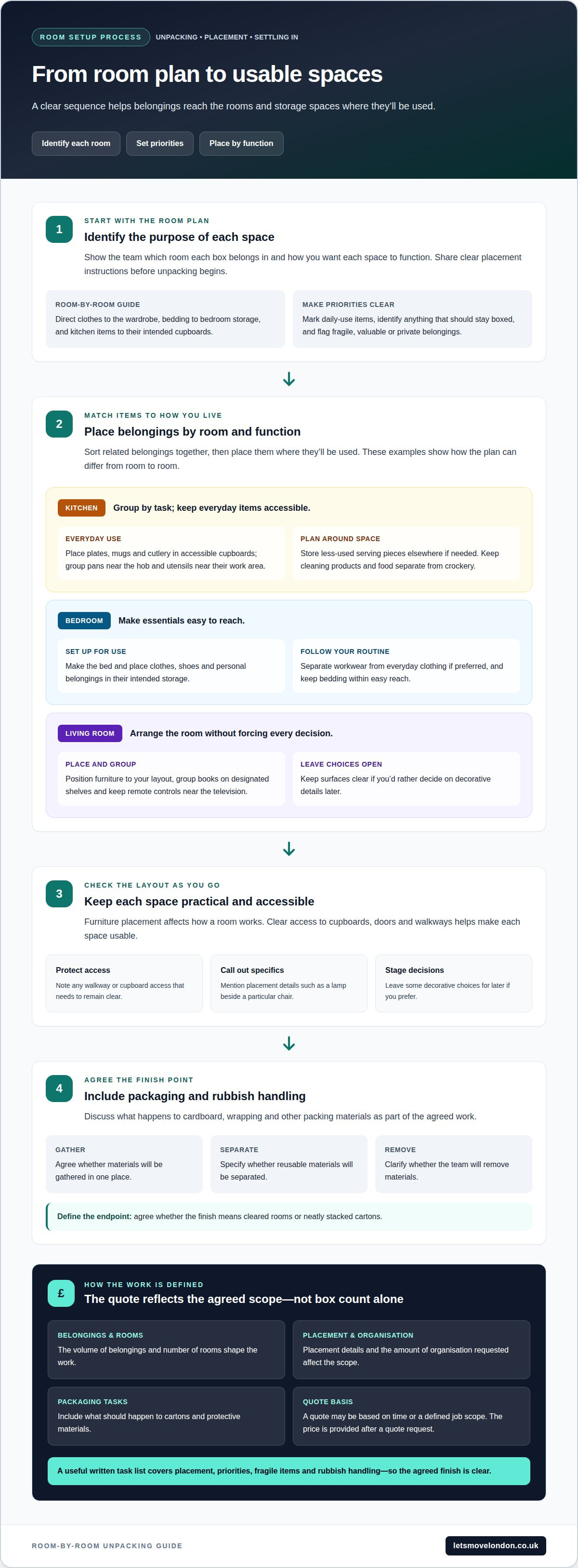
Clear placement instructions help an unpacking team put belongings where they’ll be used, rather than leaving decisions until every box is open. A room-by-room plan can direct clothes into the wardrobe, bedding into bedroom storage and kitchen items to their intended cupboards. Mark daily-use items as priorities and identify anything that should remain boxed. This gives the team a practical order for arranging each space.
What should you compare when choosing a London unpacking service? Compare the task list, placement arrangements, packaging and rubbish handling, and how the quote is calculated. Check that the agreed scope distinguishes unpacking from arranging belongings and explains what happens to empty cartons and protective materials.
Discuss packaging disposal as part of the job. Cardboard, wrapping and other packing materials can accumulate quickly during a move, so agree whether the team will gather them in one place, separate reusable materials or remove them. The service scope should make clear which option applies. A defined finish point, such as cleared rooms or neatly stacked cartons, avoids confusion at the end.
Do London unpacking companies charge hourly or by the job? A quote may be based on time or a defined job scope; the right structure depends on the work requested. The price depends on the volume of belongings, number of rooms, placement details and packaging tasks, and is provided after a quote request. A starting price is useful only if its included tasks match the work you need.
Settle-in packages can describe different levels of support, from opening and placing specified boxes to arranging belongings across several rooms. No package label tells you the full scope by itself. A useful consultation turns priorities into a written task list, including wardrobe placement, fragile items and rubbish handling. Ask for those details to appear in the quote, so the agreed finish is clear before the removal day. For a broader relocation plan, explore moving and settling-in guidance.
Kitchen, bedroom and living room setup
Room setup works best when the unpacking team follows a clear sequence. They can identify each room, match packed items to their intended spaces, then place belongings according to your instructions. For example, kitchen utensils can be grouped near the worktop where they’ll be used. Furniture placement also matters: clear access to cupboards, doors and walkways helps make each room usable. A tailored plan can account for the home’s layout and the household’s routines.
In the kitchen, the team can sort items by function before placing them. Everyday plates, mugs and cutlery can go in accessible cupboards, while less-used serving pieces can be stored elsewhere. Explain your preferred locations, keeping cleaning products and food separate from crockery. Small details, such as grouping pans near the hob, make the space easier to use. If cupboard space is limited, the placement plan should show which items take priority.
In the bedroom, unpacking can focus on making the bed and placing clothes, shoes and personal belongings in their intended storage. A wardrobe plan can separate workwear from everyday clothing, if that suits your routine. Place bedding where it’s easy to reach, while items you rarely use can remain packed or go into storage. Clear instructions help the team avoid mixing belongings between bedrooms.
The living room often combines furniture, books, electronics and decorative objects. The team can place furniture according to your layout, then group smaller items on shelves or tables. For example, keep remote controls near the television and arrange books on the shelves you designate. Leave surfaces clear if you’d prefer to decide on decorative details later. This staged approach makes setting up the room easier without forcing a final arrangement.
Before work begins, note any placement decisions that need care, such as keeping a lamp beside a particular chair or leaving a walkway open. The team can use these details to finish each room in a practical order. Clear priorities help turn packed boxes into usable kitchen, bedroom and living spaces.
What a professional unpacking service includes
A professional unpacking service should define the work before the team arrives. The agreed scope can cover opening boxes, grouping items by room, placing belongings and gathering packaging. For example, a bedroom task might include unpacking bedding and placing clothes in designated storage. This differs from simply moving cartons indoors, so a written task list helps set expectations.
Placement instructions shape the result. The team can follow room labels and a simple priority order, such as setting up everyday kitchen items before decorative pieces. Fragile belongings may need careful handling, while items marked for storage should stay separate. If you prefer to make final decisions yourself, the team can leave selected boxes unopened rather than place their contents without direction.
Decluttering is a separate decision from unpacking. A team can group items you’ve identified for keeping, storage or removal, but shouldn’t decide what to discard. For instance, label a box of books for the study and keep it apart from belongings intended for donation. Clear categories reduce confusion during a move and help the team follow your preferences.
Before the appointment, share access details, room names and placement priorities. A short consultation can clarify whether the work includes furniture positioning, packaging collection or only carton unpacking. Confirm the agreed finish point, such as making specified rooms usable, rather than assuming every organising task is included. This can reduce stress when movers and unpackers have separate responsibilities.
A fantastic result comes from matching the service level to the home, not choosing the broadest package. Consider the number of rooms, the volume of packed belongings and how much placement guidance you want. Questions re moving, access and storage can also affect the plan. Keep the scope practical, then plan your move around the tasks that matter most.
Let's Move London
Let's Move London can support the wider move when unpacking is part of settling into a new home. Its moving service helps with the relocation, while storage can suit belongings that aren’t ready for placement or need to stay out of the way during the transition.
Consider these options when coordinating move logistics with your unpacking plan. For example, keeping selected belongings in storage can leave more room to organise essential spaces first. Share your priorities and identify the items that need to move or be stored, so the arrangements reflect your plans for the new home.
For help planning the move and storage around your settling-in priorities, contact Let's Move London.
Make your next move feel more manageable
Choose the support that fits your plans, then assign each task a clear place in the move schedule. A well-defined scope helps you decide which rooms need attention first and what should happen to belongings that aren’t ready for their new place. This can make settling in feel more structured, even when the move brings competing demands.
If you’re arranging professional unpacking services in London, consider how the move and any storage needs fit together. Let's Move London offers moving, storage and man and van services to help with the practical logistics of your relocation. These options may suit you if you need help moving belongings or storing some items while you organise your home.
Set out your priorities and the support you need for the move. Contact Let's Move London to discuss the next step, and start settling into your home with a clearer plan.
Frequently Asked Questions
How much does it cost?
The price depends on the job and is provided after a quote request. Key factors include the quantity of belongings, number of rooms, placement requirements, property access and packaging disposal. A brief describing the tasks gives the provider a clear basis for pricing. Opening boxes in one room differs from unpacking and organising belongings throughout a home.
Do you dismantle and reassemble furniture?
Furniture assembly is referenced in Let's Move London's moving information, but any dismantling or reassembly should be specified in the agreed move scope. Bed frames, wardrobes and tables can involve different handling requirements. List the pieces that need attention and whether they need taking apart, rebuilding or simply positioning. This separates furniture tasks from unpacking cartons.
How does unpacking work with my removals company?
Coordinate responsibilities before moving day so cartons arrive in the rooms where they’ll be unpacked. Agree who handles fragile items, furniture positioning and packaging materials, then share room labels or priority notes with the relevant teams. Let's Move London includes insurance with every move. Clear responsibilities help avoid duplicated work and keep the move plan organised.
How long does an unpacking project take?
The time depends on the volume of boxes, number of rooms, access and how much placement is required. A documented job involving a 2-bedroom flat being packed, moved and unpacked took just over two hours. That example covers a combined move, rather than unpacking alone. A clear task list helps establish the work involved for your home.
How long will it take to pack, unpack or declutter?
Timing depends on how many belongings need handling and how ready they are for packing or placement. Packing takes longer when items need sorting or extra protection. Unpacking also takes longer if each item needs a placement decision. Decluttering adds decision-making time, especially when belongings must be separated into groups to keep, store or remove.
How much is unpacking in London?
There isn’t one fixed London-wide cost for unpacking. The price depends on the job and is provided after a quote request. The main factors are the size of the job, number of rooms, level of organisation and packaging tasks. For moving quotes, Let's Move London assesses the volume of goods and distance involved.


Comments