
Moving from a house to a flat in London: reasons and costs
A smaller home does not automatically mean a simpler move. Moving from a house to a flat when downsizing in London means weighing up less space, sale and purchase timing, the money you may release and the practicalities of moving.
It is easy to focus on the rooms you are leaving behind or the work involved in sorting years of belongings. Your new home should also suit how you want to live, including access, storage and the ongoing costs of a flat.
This guide covers what downsizing involves, why London homeowners make the move and whether to sell before buying. It also outlines the costs to plan for, from property transactions to removals, so you can make informed decisions about your finances and moving arrangements.
Table of Contents
1. Should I sell my house before buying a smaller property?
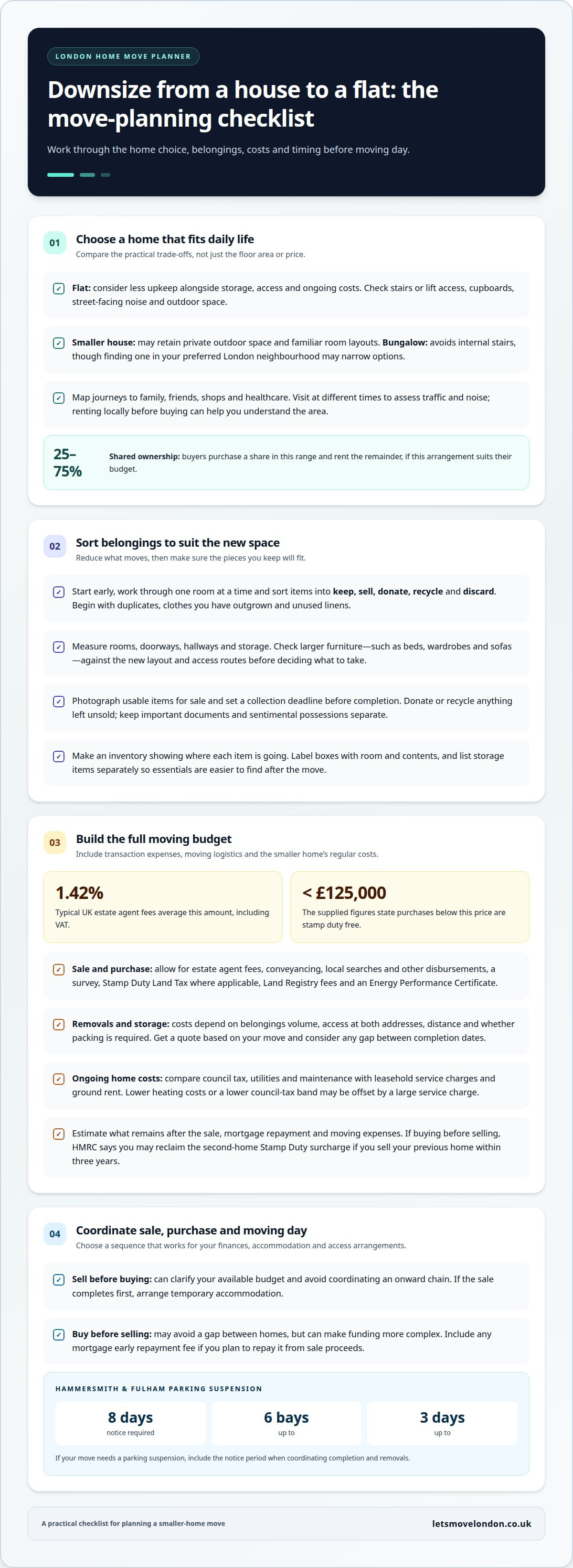
Selling your London home before buying can simplify your move by removing the need to coordinate an onward chain. It also clarifies your available budget, making it easier to choose a smaller property that fits your finances. If your sale completes before your purchase, you will need to arrange temporary accommodation. Buying first may avoid that gap but can make funding the purchase more complex. If you plan to repay a mortgage from the sale proceeds, include any early repayment fee in your calculations.
Compare a flat, bungalow and smaller house based on how each would support your daily life. A flat may mean less upkeep, but consider its storage, access and ongoing costs. A smaller house may retain private outdoor space and familiar room layouts. A bungalow avoids internal stairs, although finding one in your preferred London neighbourhood may narrow your options. Renting in an area before buying can help you get a feel for its pace, transport and local amenities.
Choose a location around your routines, not just the property price. Map the journey to family, friends, shops and healthcare, then visit at different times to assess traffic and noise. Consider whether you want a central apartment or a quieter residential street. If a shared-ownership home suits your budget, buyers purchase a share between 25% and 75% and rent the remainder.
For accessibility, storage, noise and outdoor space, assess each flat against your daily needs. Look for lift access or stairs, useful cupboards, street-facing noise and a balcony, shared garden or nearby green space. These features shape comfort as much as floor area.
Plan the exchange and moving date around your sale, purchase and access arrangements. In Hammersmith & Fulham, suspending up to six parking bays for up to three days requires 8 days’ notice, according to the London Borough of Hammersmith & Fulham. If your move needs a parking suspension, include that lead time when coordinating completion and removals. Secure temporary storage if the dates leave a gap between homes.
2. What Are The Advantages Of Home Downsizing?
Downsizing can reduce the space you heat, furnish and maintain, while releasing equity from your family home. The actual benefit depends on the properties and household costs involved. Compare potential savings with any service charges or other regular costs attached to the smaller property.
Declutter before moving day rather than leaving it to the final rush. Start with straightforward items, such as duplicate kitchen equipment, clothes you have outgrown and unused linens. Sort belongings into clear groups: keep, sell, donate, recycle and discard. Work through one room at a time to keep decisions manageable and steadily reduce what needs to be moved.
Measure the new flat before deciding which furniture to take. Record room dimensions and check doorways, hallways and storage spaces against larger items such as beds, wardrobes and sofas. A wide wardrobe, for example, might fit the bedroom but block access to a cupboard. Keep the pieces that suit the new layout and your everyday needs.
Once you have decided what to part with, photograph usable furniture and household items for sale. Set a collection deadline before completion, then donate or recycle anything that remains unsold. This helps keep unwanted belongings out of your smaller home. Separate important documents and sentimental possessions from items being sold or removed.
Use a simple inventory to record where each item is going. Label boxes with their room and contents, and list separately anything going into storage rather than straight to the flat. This limits unnecessary unpacking and makes essentials easier to find after the move. A smaller garden or fewer nearby amenities may also affect which equipment and supplies you need to keep.
Plan the furniture and sorting stages alongside your moving arrangements. Organise the practical side of your move once you know what is coming with you.
3. Estate agent, conveyancing, survey and removal costs
Work out the costs of selling and buying before estimating how much equity you could release. Typical UK estate agent fees average 1.42%, including VAT. Local searches and other disbursements add to the total, so include them in your budget.
A survey is another purchase cost. Stamp Duty Land Tax applies to the taxable portion of a purchase, with the supplied figures stating that property purchases below £125,000 are stamp duty free. Add Land Registry fees and an Energy Performance Certificate to your transaction checklist.
Removal costs depend on the volume of belongings, access at both addresses, the distance and whether packing is required. Ask for a quote based on the details of your move. Consider how much space you will have in the new bedroom and whether you need temporary storage between completion dates. In London, parking arrangements can also affect the moving plan.
Compare the smaller home’s ongoing costs with your current household bills. A flat may cost less to heat, but leasehold service charges and ground rent can reduce the savings. Factor communal charges into your council tax, utilities and maintenance budget. A lower council-tax band may reduce the bill, while a large service charge could change the overall calculation.
Finally, estimate what remains after the sale, mortgage repayment and moving expenses. That figure can support retirement plans or help children, but avoid choosing somewhere solely to maximise released equity. If you buy before selling, HM Revenue & Customs says you may reclaim the second-home Stamp Duty surcharge if you sell your previous home within three years.
4. Reasons to downsize from a house to a flat
A house can become harder to manage when rooms sit unused and routine upkeep takes time. One 82-year-old homeowner found his four-storey house too large. For homeowners moving from a house to a flat while downsizing in London, fewer rooms may mean less upkeep and a layout better suited to current needs. The key is deciding whether those benefits outweigh what you’d miss from the family home.
Finances can also influence the decision. A third of central London residents have considered downsizing or relocating to reduce their outgoings. Selling a larger home may release equity that could reduce a mortgage or support retirement plans. Compare this with the costs of the new home: a smaller property may have service charges, and a lower council tax bill does not necessarily mean lower overall spending.
Consider access as well as floor space. A ground-floor flat may suit someone who wants to avoid stairs as their mobility changes. A fourth-floor home without reliable lift access could become difficult to live in over time. Think about whether the entrance, lift, storage and nearby amenities will meet your needs in five, ten or fifteen years. These details may matter more than an extra bedroom.
Your location shapes daily life after leaving a house. Map regular trips to family, shops and transport, and consider how the neighbourhood feels at different times of day. A central flat may put amenities closer, while a quieter street may offer a calmer setting. An estate agent can help identify suitable properties, but let your own priorities guide the search. List what you need, what you can compromise on and what you will miss, such as a private garden.
Moving from a house to a flat as part of downsizing in London makes most sense when the new home better fits your life. If you’re thinking about the practical move, plan your move with practical support.
Let's Move London: Moving
Let's Move London helps organise moves from larger houses to smaller flats. When you are ready to plan, the team can handle your belongings with care. A clear inventory of what is moving, what needs storage and what is going to the new flat helps organise the practical details.
If completion dates do not align, secure storage can keep selected belongings out of the way until your flat is ready. For a smaller move or a more focused transport need, Let's Move London’s man and van service may be suitable. The right option depends on the belongings and the move itself.
For a considered next step, contact Let's Move London to discuss your move.
Make your next move work for the life you want
Moving from a house to a flat as part of downsizing in London gives you the chance to shape your next chapter around everyday priorities. Before taking the next step, consider what a good week in your new home would look like. Think about the routines you want to make easier, the people you want nearby and the belongings you want to keep close. These priorities can guide your decisions as plans develop.
Once you are ready, turn your chosen move date into a practical plan. Set out what needs to happen before moving day, what must travel with you and what may need temporary storage. A clear plan gives each decision a place and helps keep the transition organised.
For support with the move, contact Let's Move London. Take the next step at your own pace and make your new flat feel like home.
Frequently Asked Questions
What Does It Mean To Downsize Your House?
Downsizing means moving to a home with less space or fewer rooms, often to better suit your current needs. For example, a household whose children have moved out might choose a flat designed around everyday living rather than several rarely used bedrooms. Downsizing can also mean sorting possessions before moving so the new home remains practical rather than overcrowded.
Downsizing in London?
Downsizing in London means balancing your choice of home with its location and your everyday journeys. Consider how often you travel to work, visit family or use local amenities, then compare those routines with potential neighbourhoods. A flat near transport may suit one household, while another may prioritise a quieter street or outdoor space. The best fit depends on how you want to live.
Should I sell my house before buying a smaller property?
Selling first can clarify your available budget, while buying first may let you move directly into your new home. The right choice depends on sale and purchase timing, mortgage arrangements and whether you can manage a temporary gap between properties. If completion dates do not align, for example, plan where you will stay and how your belongings will be stored during the transition.
What Are The Advantages Of Home Downsizing?
Downsizing can make everyday tasks more manageable by matching your living space to your current routines. Fewer rooms may mean less cleaning and fewer furnishings to maintain. A well-chosen flat can also bring shops, transport or family closer to home. Weigh these practical benefits against what you value about your present home, such as a garden or space for visiting relatives.
How common is downsizing?
Downsizing is one option to consider as your needs change, but it is not right for every household. Children leaving home, retirement or a wish to live elsewhere can prompt a review of your housing needs. Others may prefer to stay because their current home suits their routines and community. The key question is whether a move fits your own priorities.
Planning a Move in London?
Plan your London move by confirming handover arrangements, mapping access at both homes and separating essentials from items going into storage. Measure large furniture against the new flat’s rooms and entrance routes. Keep documents, medicines and daily-use items together for easy access on arrival. A clear inventory helps direct boxes to the right rooms and reduces confusion during unloading.



Comments