
How to Protect Your Property During a London Move
Damage is easier to prevent than repair. Knowing how to protect your property during a move starts with planning the route, protecting floors and vulnerable surfaces, and taking care around walls, corners and bannisters. A removals team can help coordinate these steps. You can also ask a neighbour to keep an eye on an empty home and let you know about expected visits or appointments.
It’s understandable to focus on your belongings, but doorways, staircases and shared areas need attention too. In London homes, narrow halls and tight turns can make moving large furniture more challenging. Tell your removals team about access restrictions and surfaces that need particular care. This guide explains how careful handling can reduce the risk of damage, what to share before moving day, and how a neighbour can help while the property is empty.
Table of Contents
How a removals team can coordinate with a neighbour to keep an eye on the property
Careful handling and suitable packing help protect valuables, documents and electronics. Before the move, point out anything that needs extra attention, such as a laptop, passport folder or valuable ornament, so the team can plan accordingly.
Home insurance cover during a house move depends on the policy terms, including whether belongings are covered in transit or during temporary storage. Review the exclusions and cover period to understand what protection applies.
Choose a neighbour and agree their role. Ask someone you trust to keep an eye on the property while it’s vacant. Agree how they’ll share updates about unexpected visits, access issues or signs of damage.
Share the moving schedule. Give the neighbour the expected arrival and departure period, plus the dates when the property will be empty. This helps them recognise planned activity without asking them to manage the removal.
Coordinate access details. Tell the removals team which neighbour is helping and how they can be reached on moving day. Keep key arrangements clear, and don’t leave keys in an obvious place or pass them through an unplanned visitor.
Explain expected appointments. If a viewing, delivery or property appointment is scheduled, make sure both the neighbour and removals team know when it’s due. The neighbour can flag an unexpected arrival, while the team can avoid obstructing the entrance during loading.
Set a simple update plan. Agree whether the neighbour will call or message if they notice an issue. For example, they can report an unsecured entrance or a missed appointment, rather than trying to resolve a property or access problem themselves.
Close the loop after loading. Ask the team to communicate when the property is cleared, so the neighbour knows when the move has finished. The neighbour can then keep an eye on the vacant home during the remaining period before you return or hand over access.
Benefits of professional removals teams
A professional team coordinates lifting, loading and transport as one operation. This can reduce rushed handling, protect belongings and help prevent avoidable marks in tight London hallways.
Before moving, understand what protection applies to loss or damage, including any limits, exclusions and claims process. Read the terms alongside your home insurance policy, especially for valuable items, electronics and important documents.
There is no single UK price for removals insurance. Costs depend on the cover arrangement, declared value of belongings, excess and exclusions.
Without suitable cover, you may have fewer options for recovering losses if belongings are damaged or lost. Clear company details and terms also make it easier to understand how to raise a concern if something goes wrong.
Share the property details. Give the removals team accurate information about stairs, narrow turns, parking and access at both addresses. A bulky wardrobe or fragile glass table may need a different handling plan from standard boxes.
Agree what the move includes. Confirm the written scope, moving date, addresses, items to be transported and any agreed packing arrangements. A clear inventory helps both sides identify what should be loaded and delivered.
Review the protection terms. Read the liability cover wording for exclusions, limits, excesses and how to report damage. Check whether valuable belongings, documents or electronics need separate attention under your insurance arrangements.
Keep key records together. Save the written agreement, inventory and relevant messages in one place. For example, keep a record of a pre-existing scratch on a cabinet, so its condition is clear before loading.
Use these checks to prepare for a more organised move. Explore professional moving support for help coordinating the practical details.
Clear walkways before the removals team arrives. Remove loose rugs and hallway clutter, especially near stairways and the route used to carry items.
In the UK, inviting a partner to live in a solely owned home may create a beneficial interest, particularly if the partner contributes financially or receives an implied promise of ownership. A partner may have grounds to make a claim if they can show they relied on a promise or assurance about sharing the property. Keep this possibility in mind when arranging a move into a home you own alone.
How professional removers prevent damage to walls, corners and bannisters
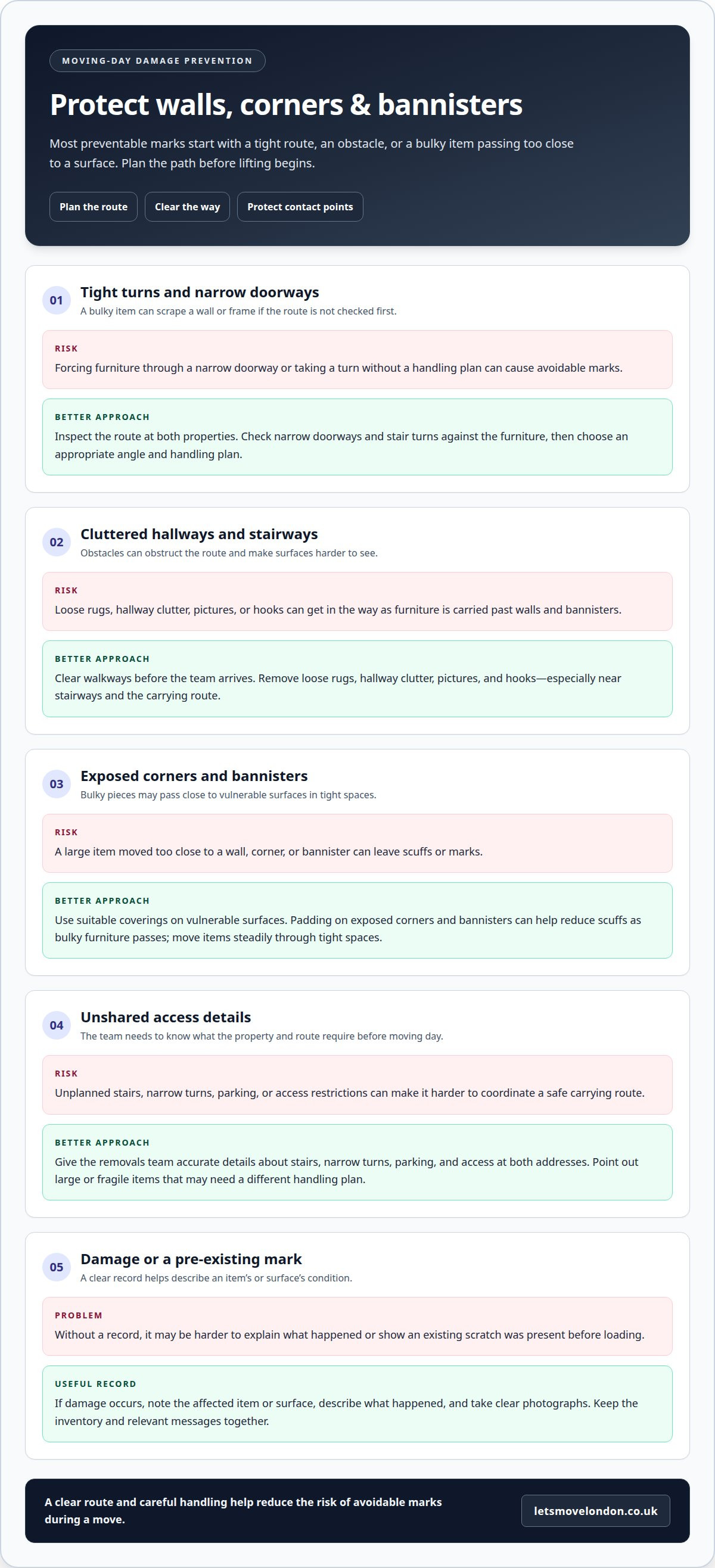
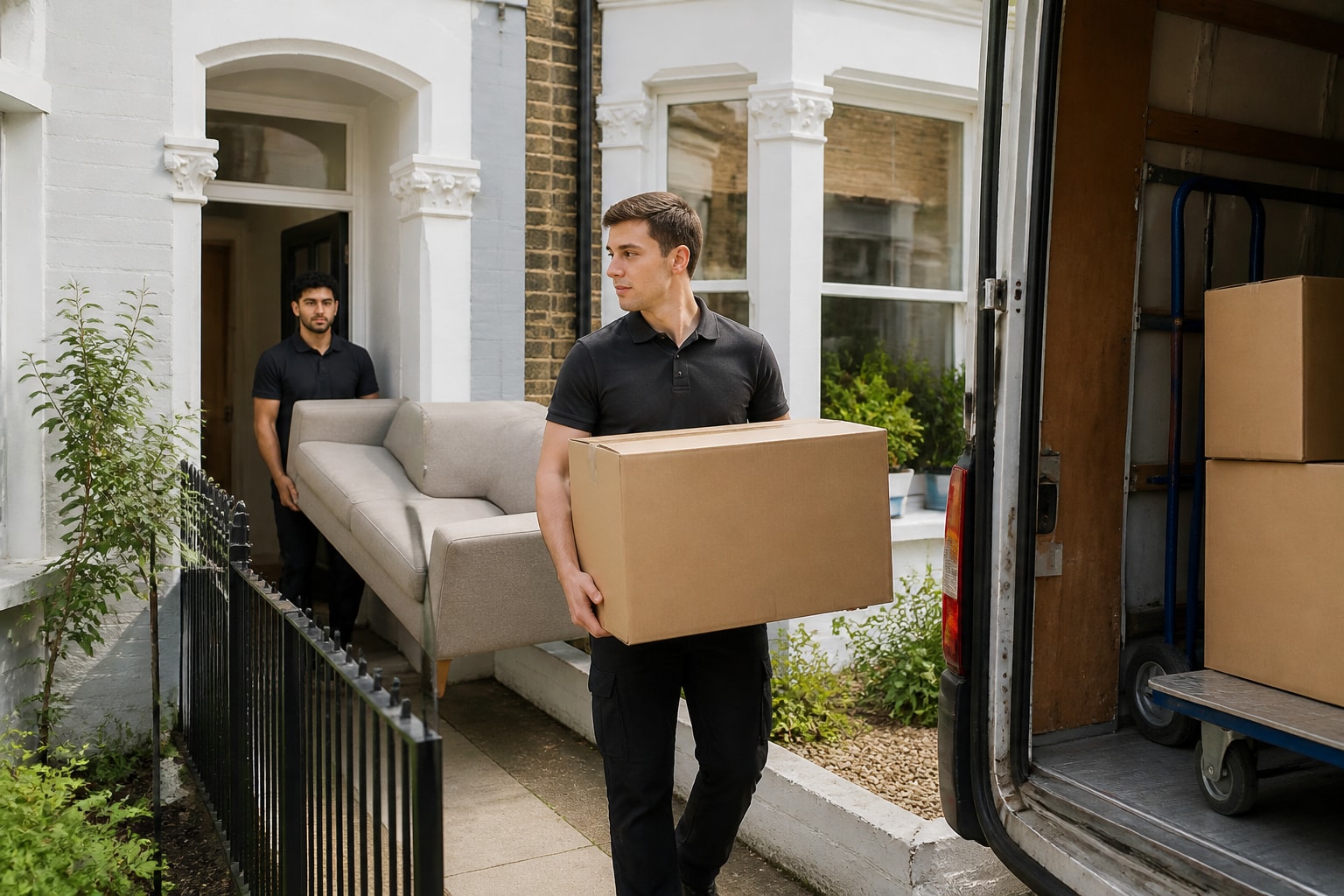
For large or heavy furniture, professional movers can plan the route, assess tight turns and coordinate handling on stairs. A key part of protecting your property during a move is choosing a safe carrying route before lifting begins. This helps avoid forcing a sofa through a narrow doorway or scraping walls and frames.
If damage occurs, record the affected item or surface, describe what happened and take clear photographs. Keep the inventory and relevant messages together. This provides a useful record when discussing the incident and deciding what happens next.
Inspect the route before carrying. Removers identify narrow doorways, stair turns and exposed corners at both properties. They compare furniture dimensions with the route, then choose an appropriate angle or handling plan.
Clear vulnerable hallway areas. Remove pictures, hooks and loose clutter before moving furniture. This reduces obstacles and gives the team a clear view of walls and bannisters as items pass.
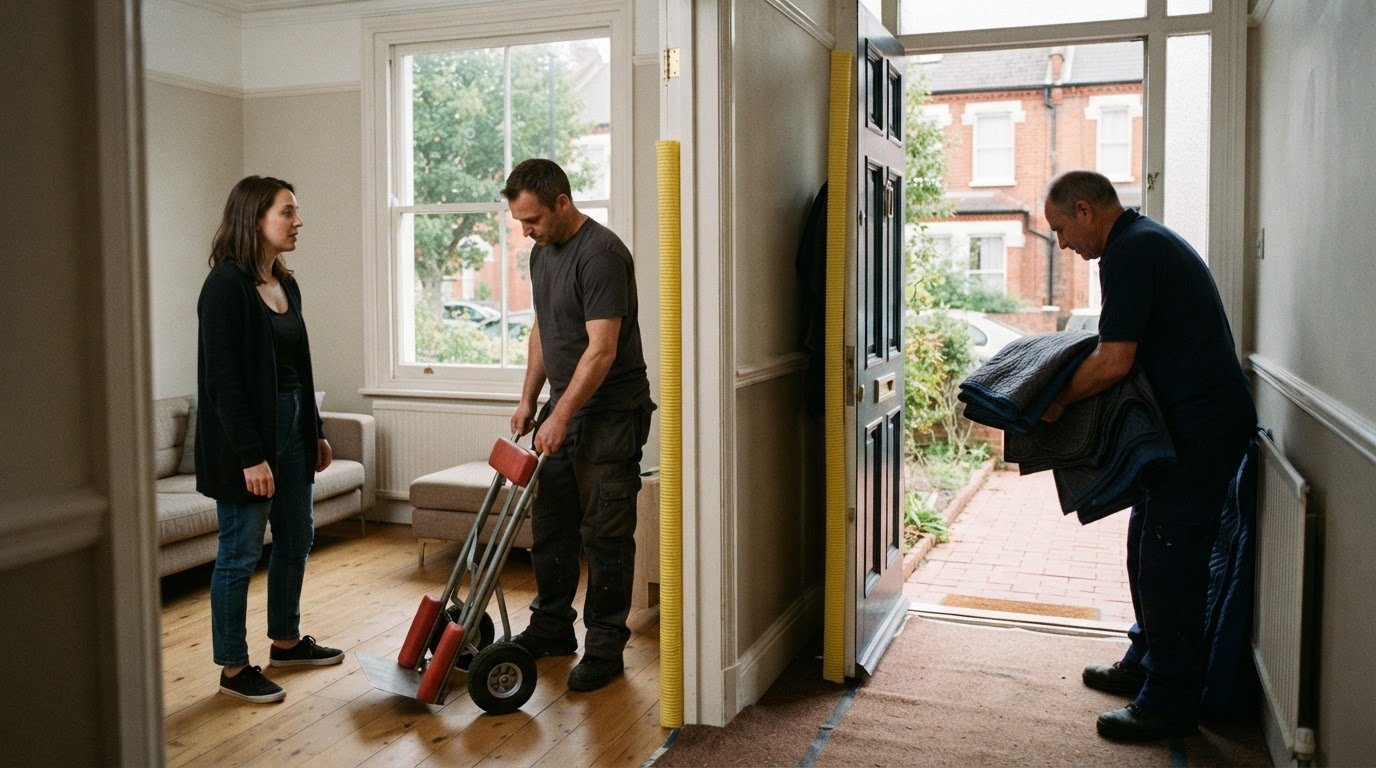
Protect contact points. Removers use suitable coverings on vulnerable surfaces and move furniture steadily through tight spaces. Padding on exposed corners and bannisters helps reduce scuffs when bulky pieces pass close by.
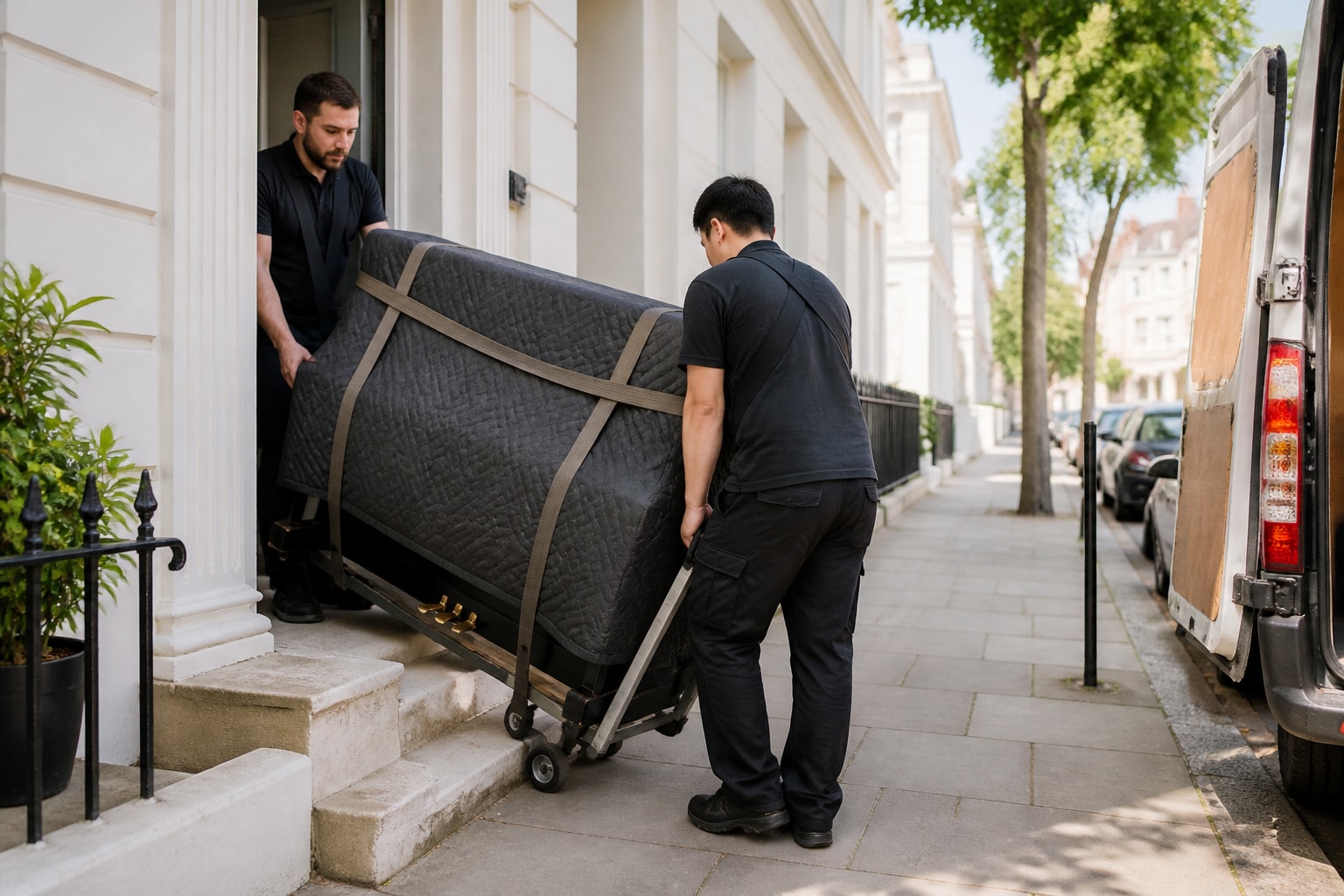
Control the lift and turn. For a large wardrobe on a staircase, the team coordinates the lift and turning point. Two-person handling helps keep the item controlled, while planned pauses reduce rushed movements.
Document any damage promptly. Note the location and affected item, then take clear photographs. Report the issue through the agreed moving process and retain the inventory and relevant messages.
Before moving day, share details about delicate finishes, tight access and unusually shaped furniture. For anyone considering how to protect your property during a move, this information helps the team plan handling and surface protection around the actual layout.
What packing materials best protect furniture and fragile items during a move?
Match the material to the surface. For a wooden table, use padded furniture blankets to reduce scuffs and knocks. Secure the covering so it stays in place while the item is carried. Avoid placing adhesive directly on polished wood, since it may leave residue or affect the finish.
Wrap glass and ceramics separately. Use packing paper or suitable cushioning around each plate, vase or glass. Place items upright in a sturdy box, with cushioning between pieces to limit contact. Keep heavier objects out of boxes containing delicate glassware.
Use boxes that fit the contents. A box that’s too large allows fragile items to shift; one that’s overfilled may strain at the seams. A professional packer selects a suitable size, fills empty spaces with cushioning and closes the box securely.
Protect screens and electronics. Use the original packaging where available, or choose a close-fitting box with cushioning around the device. Keep cables and small accessories together, but separate them from screens to prevent pressure or scratches during transit.
Cover soft furnishings thoughtfully. Protective covers can help keep sofas and mattresses clean during loading and transport. Ensure the covering suits the item and doesn’t trap dampness. For a delicate finish or unusual shape, the team can select a more tailored packing approach.
Label boxes for careful placement. Mark boxes containing fragile contents clearly, and identify which side should remain upright. Labels help the team handle them appropriately and position them carefully at the destination. Keep the description useful, without listing valuable contents where it could be seen by others.
Tell the removals team about fragile pieces, electronics and delicate finishes before packing begins. That lets them plan suitable materials and handling for each item. For help arranging a move with careful packing, discuss your moving requirements.
For items being carried upstairs, pack boxes at a manageable weight. Separately, a cohabitation agreement can set out who owns a property, how household costs are shared and what happens if a couple separates. A Deed of Trust can formally record property ownership and what happens if the couple separates.
Let's Move London
Let's Move London helps make property protection part of a planned move, with house removals, professional packing and secure storage solutions. Share details such as narrow staircases, delicate furniture and vulnerable finishes so the team can account for them when arranging your move.
Consider secure storage if belongings need to be kept safely while you wait for your move-in date or access to the new home. A clear plan for the property, belongings and timing helps keep the transition organised while protecting walls, floors and bannisters.
Contact Let's Move London to discuss your move and the support you need.
Set up your move with confidence
Before moving day, bring the practical decisions together in one clear plan. Tell the removals team about access restrictions, delicate belongings and anything that could affect how items leave or enter the property. This gives the team useful context to organise the move around your home, not just the contents being transported.
Planning how to protect your property during a move also means preparing for changes. If your new home isn’t ready, storage can bridge the gap. For a smaller move, a man and van service may suit the task. Choose support that fits your circumstances and keep communication clear as arrangements develop.
Let's Move London offers Moving, Storage and Man and van services to support different moving needs. Share the details of your move and the areas you want handled carefully, then take the next step at a pace that works for you.
Contact Let's Move London to discuss your move and plan the support you need.
Frequently Asked Questions
How do professional removers protect floors, walls and doorways during a house move in the UK?
Professional removers use suitable floor coverings and protect exposed surfaces along the carrying route. On timber, laminate or tile, non-slip coverings help reduce movement underfoot. They can keep entrances clear, secure doors safely where appropriate, and take extra care in wet weather, when spare mats help manage damp shoes. A clear route also helps prevent furniture catching doorframes or scraping floors during loading.
Comments