
How to coordinate a move with an ex-partner through mediation
The move itself may be the easiest part of separating. Learning how to coordinate a move with an ex-partner takes clear communication, practical boundaries and a shared focus on the arrangements still to be made. When conversations become difficult, mediation can provide a structured way to discuss decisions without letting conflict take over.
It’s understandable if planning feels emotionally charged, especially when you’re still sharing a home or need to agree on arrangements for children. This guide explains how to keep communication focused, set workable ground rules, avoid actions that add tension and concentrate on what you can control. It also outlines when mediation or professional advice may help, so you can approach the next steps with greater clarity and a more organised plan.
Table of Contents
1. Actions to avoid while moving on
Don’t measure your recovery against your ex-partner’s. One person may settle into a new routine quickly, while the other needs more time. Instead, compare your progress with how you felt before: can you discuss a removal date calmly, or pack a room without reopening old arguments? Avoid monitoring your ex on social media or flaunting new dates. Either can increase tension while practical decisions are still outstanding.
If you’re sharing a home after the relationship ends, don’t use sex to restore closeness or resolve uncertainty. It can blur boundaries while you’re deciding who moves, what happens to shared belongings and how you’ll communicate. Agree ground rules for private space, visitors and essential conversations. If direct discussions become heated, keep messages focused on the move, such as confirming a collection time or asking which boxes belong to each person.
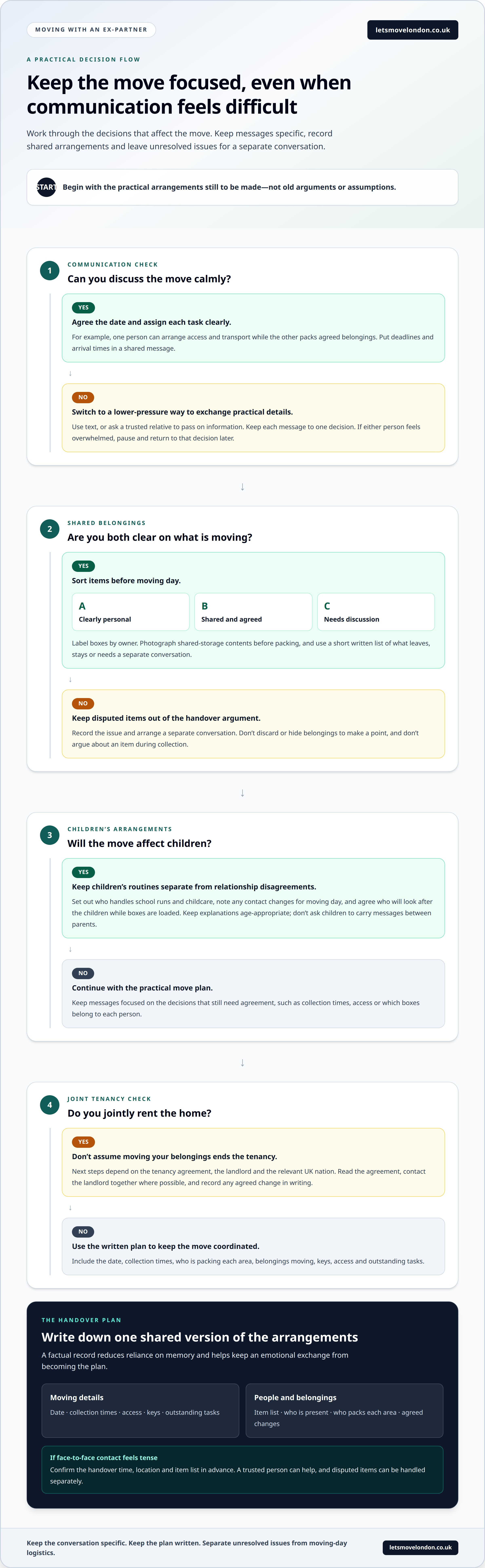
If you jointly rent your home, don’t assume that moving your belongings out also ends the tenancy. The next steps depend on the tenancy agreement, the landlord and the relevant UK nation. Read the agreement, contact the landlord together where possible, and record any agreed change in writing. If you’re a parent and the move affects children, keep their routines and arrangements separate from disputes about the relationship.
Sort belongings before moving day, rather than during a rushed collection. Make three groups: clearly personal items, shared items you agree to divide, and disputed items that need further discussion. Label boxes by owner and photograph the contents of shared storage before packing. Don’t discard or hide anything to make a point. A short written list helps clarify what leaves, what stays and what needs a separate conversation. Keep the exchange calm and specific.
Where a parent with parental responsibility in England and Wales plans to relocate abroad with their children, the UK legislation register says they should obtain written consent from the other parent who has parental responsibility. A parent seeking a decision on whether children should relocate may apply to the court for a specific issue order.
2. Communicating and setting boundaries
To coordinate a move with an ex-partner, agree the moving date and assign each task clearly. For example, one person can arrange access and transport while the other packs agreed belongings. Put deadlines and arrival times in a shared message. If direct conversations are difficult, use text or ask a trusted relative to pass on practical information. Keep each message focused on one decision.
Write down the plan so you can both refer to the same version. Include the date, collection times, who is packing each area, which belongings are moving and how you’ll handle changes. Add arrangements for keys, access and outstanding tasks. Keep the record factual, so neither person has to rely on memory or interpret an emotional exchange.
If you share children, discuss their routines separately from disagreements about the relationship. Set out who will handle school runs and childcare, and note any changes to contact arrangements on moving day. For example, agree who will look after the children while boxes are being loaded. Keep explanations age-appropriate, and don’t ask children to carry messages between parents. Whether you were married or not, practical arrangements need clear communication.
Set ground rules if you’re still living together. Agree how you’ll handle shared spaces, shopping, visitors and dating, then follow the same rules while packing. A short planning conversation can cover outstanding tasks without turning every interaction into a debate. If either person feels overwhelmed, pause and return to the specific decision later.
Plan the handover of belongings in advance. Confirm the time, location, item list and who will be present. A trusted person can help if face-to-face contact feels tense. Pack agreed items separately and label boxes by owner. If anyone disputes an item, don’t argue during the handover. Record the issue and arrange a separate conversation.
3. Focusing on what you can control
Your ex-partner’s choices may be outside your influence, but you can choose your next practical step. Pick one task for today, such as packing books, updating your address or arranging access to your new home. Completing a task gives the day direction when larger decisions feel difficult. Focus on what you can change now, rather than replaying arguments from the relationship.
Use a simple routine to reduce awkward moments if you’re still sharing a home. Set regular times for meals, laundry and packing, then keep shared areas usable. For example, agree to pack the hallway after work rather than leaving boxes across the entrance. A predictable routine won’t resolve every disagreement, but it can make everyday contact more manageable while each person prepares to move.
If you can afford to live separately, finding your own place may create clearer boundaries. Decide what you’ll need for the first night, then pack those essentials separately from items you can sort later. If moving out immediately isn’t possible, set aside a private area for your belongings and agree on a practical packing schedule. Friends can offer emotional support or help with specific tasks, such as collecting a box.
You can’t control how quickly your ex-partner adjusts or responds. You can choose whether to reply immediately, keep a message focused on arrangements or pause before answering. If a discussion triggers strong feelings, step away and return when you can address the specific decision. Acceptance doesn’t mean approving of every choice; it means directing your effort towards actions you can take.
Build progress through small daily steps. Write down one task for your new home, one personal priority and one person you can contact for support. For instance, call a friend after sorting documents, then prepare a list of essentials for moving day. This keeps your attention on the life you’re creating, rather than on a past you can’t change.
4. Mediation and professional advice
Mediation can help after a breakup when practical discussions repeatedly stall. A mediator provides a structured setting to discuss decisions, identify unresolved issues and work towards an agreement. In England and Wales, a mediator may invite you to a Mediation Information and Assessment Meeting (MIAM) after your former partner contacts them. If you’re invited, check that the mediator is registered with the Family Mediation Council.
List the expected moving costs, agree who will pay each one and record the decision. You might split a shared expense equally or allocate it according to who arranged it or benefits from it. Discuss the basis openly before committing, rather than assuming one person will cover everything.
For a joint tenancy or mortgage, don’t assume that moving out removes your name or ends your responsibilities. Contact the landlord or mortgage lender about the process for changing the agreement, and get any decisions in writing. A mediator can help you discuss practical next steps, but tenancy or mortgage questions may need separate professional advice.
If your ex-partner refuses to cooperate, send one calm written proposal with the dates, tasks and decisions needed. Keep a record of replies and suggest mediation if direct discussion has become unproductive. In non-urgent cases involving children, family court proceedings about relocation should generally be a last resort where there are no safety concerns. A school change or disrupted routine may need careful discussion. If you fear a child may be taken abroad without consent, urgent family court action may be needed.
Use mediation to address decisions, not to force agreement. Each person can explain their concerns, consider options and record any points resolved. If you’re considering a move, plan your moving arrangements alongside those discussions, so practical logistics have a clear place in the wider conversation.
In England and Wales, a person invited to mediation should usually attend the mediator their ex-partner has seen, but may choose another if they have concerns such as a conflict of interest. If the mediator who contacted them is not registered with the Family Mediation Council, they should contact an FMC Registered Mediator about seeing them instead and explain to their ex-partner why they want a different mediator. If neither partner is eligible for legal aid, they have to pay for the MIAM.
Let's Move London
Once you and your ex-partner have agreed the arrangements, Let's Move London can help with the practical move. Moving support can take physical work off your list, while secure storage can help if belongings need to be kept separately during the transition.
Turn to Let's Move London when you have a clearer idea of what needs moving, where items are going and whether storage would help. Sharing those details makes it easier to plan around agreed dates and keep logistics separate from personal discussions. You can focus on decisions between you while arranging practical support for the move itself.
If you’re ready to discuss the next step, contact Let's Move London.
Make the next step manageable
A practical way to decide how to coordinate a move with an ex-partner is to treat the transition as a sequence of manageable decisions, not one difficult conversation. Start with the next action that needs agreement, then give it a clear time and place in your plan. This keeps progress visible even when emotions shift or circumstances change.
You don’t need every detail of your new routine settled before moving forward. Focus first on what must happen for the move to proceed, and leave less urgent choices for later. If the physical arrangements are adding pressure, practical support can make more room for personal decisions.
Take the next step at a pace that feels workable. Contact Let's Move London today to discuss your moving arrangements.
Frequently Asked Questions
What steps help keep communication calm and practical during a move with an ex?
Keep each exchange neutral, specific and limited to one decision. For example, write: “The labelled boxes are ready. Please let me know whether collection from the hallway works for you.” Avoid adding complaints about the breakup or guessing what your ex believes. If a message raises unrelated conflict, reply only to the moving detail that needs an answer, then leave the wider issue for another conversation.



Comments