
Common moving day problems: how to prepare for delays and lost items
A clear inventory, readable labels and a plan for delays help keep belongings accounted for on moving day. These practical steps address common moving day problems and solutions, from misplaced boxes to late keys and a gap between homes.
It’s understandable to worry when documents, valuables or everyday essentials are packed among your household belongings. An organised move makes it easier to keep track of what is being handled and respond calmly if timings change.
This article explains how professional movers can help protect belongings, prepare for removal day and manage access or completion delays. You’ll also find practical ways to keep essentials close, prevent confusion and plan for a gap between leaving one home and moving into the next.
Table of Contents
1. Decluttering before packing
Start decluttering at least one week before moving day, including lofts, garages and garden sheds. A professional removals team can work from a clear inventory, separating items to be moved from those staying behind. Fewer belongings mean fewer boxes to load, carry and unpack. Donate, sell or recycle unwanted items before finalising your packing plan. Making these decisions early can reduce stress and prevent you from packing things you don’t intend to keep.
Professional packing can be arranged alongside a move when preparing every room feels difficult. The team can pack by room, protect fragile possessions and keep box descriptions detailed enough for delivery. Packing time depends on the property size and the amount of belongings. As a guide, a studio or one-bedroom property can take 2-4 hours, while a two-bedroom home can take 4-6 hours.
A three-bedroom property can take 6-8 hours to pack professionally. A four-bedroom home may take 7-9 hours, and a five-bedroom home 9-11 hours. These durations help with planning, but the volume of belongings and preparation also affect the schedule. Decluttering before packers arrive helps them focus on the items going to the new address.
Clear labels make room-by-room unloading easier. Mark each box with its destination room and main contents, and place the label where it is visible on the top and at least one side. For example, “kitchen, mugs and plates” shows the team where the box belongs and helps you prioritise unpacking. Colour-coded labels can make room allocation even clearer.
Wrap fragile belongings individually and use sturdy boxes with cushioning to prevent items moving inside. Strong, double-walled boxes and secure loading help reduce the risk of damage during packing and transit. Keep boxes light enough to carry safely, and don’t overload them with heavy items. If furniture is dismantled, put screws and fittings in clearly labelled bags and keep them with the right item. These steps make belongings easier to identify and handle throughout the move.
2. Choosing and communicating with a removal company
Book a removal company as soon as your moving date is known. Planning ahead gives the team time to understand the size of the move and arrange suitable vehicle space. A survey of your belongings helps assess the vehicle required. Share a detailed inventory, the correct delivery address and any bulky or delicate items. Mention a piano, for example, so the team can plan its handling and loading.
Clear instructions help avoid confusion at both properties. Send the collection and delivery addresses, access details and timing constraints together in writing. Include narrow staircases, lift restrictions and items that must stay with you. If broadband, utilities or phone service appointments are scheduled, share their times too. This helps the removal team account for other essential services and avoid access conflicts.
Protect valuables by keeping documents, jewellery, medication and chargers with you rather than loading them onto the van. Photograph valuable belongings before the move and retain the images alongside your inventory. Bubble wrap can cushion fragile items, but suitable packing and secure loading also matter. Standard home insurance might not cover belongings in transit, so review the removal company’s policy, including its excess and claim limits. Keep photographs and box labels as evidence if you need to report damage or missing items.
Parking needs early coordination, especially on a narrow London street or where a building restricts deliveries. Contact the councils for both addresses to check whether a removal-van permit is needed. Tell the removal team about loading restrictions, reserved bays and any lift booking or delivery slot. Book the move six to eight weeks ahead where possible, particularly during busy summer periods. Reconfirm dates, times and contact details 48 to 72 hours before moving day. For a more organised move, discuss your removal arrangements with professional movers.
4. What Are the Most Common Moving Day Disasters?
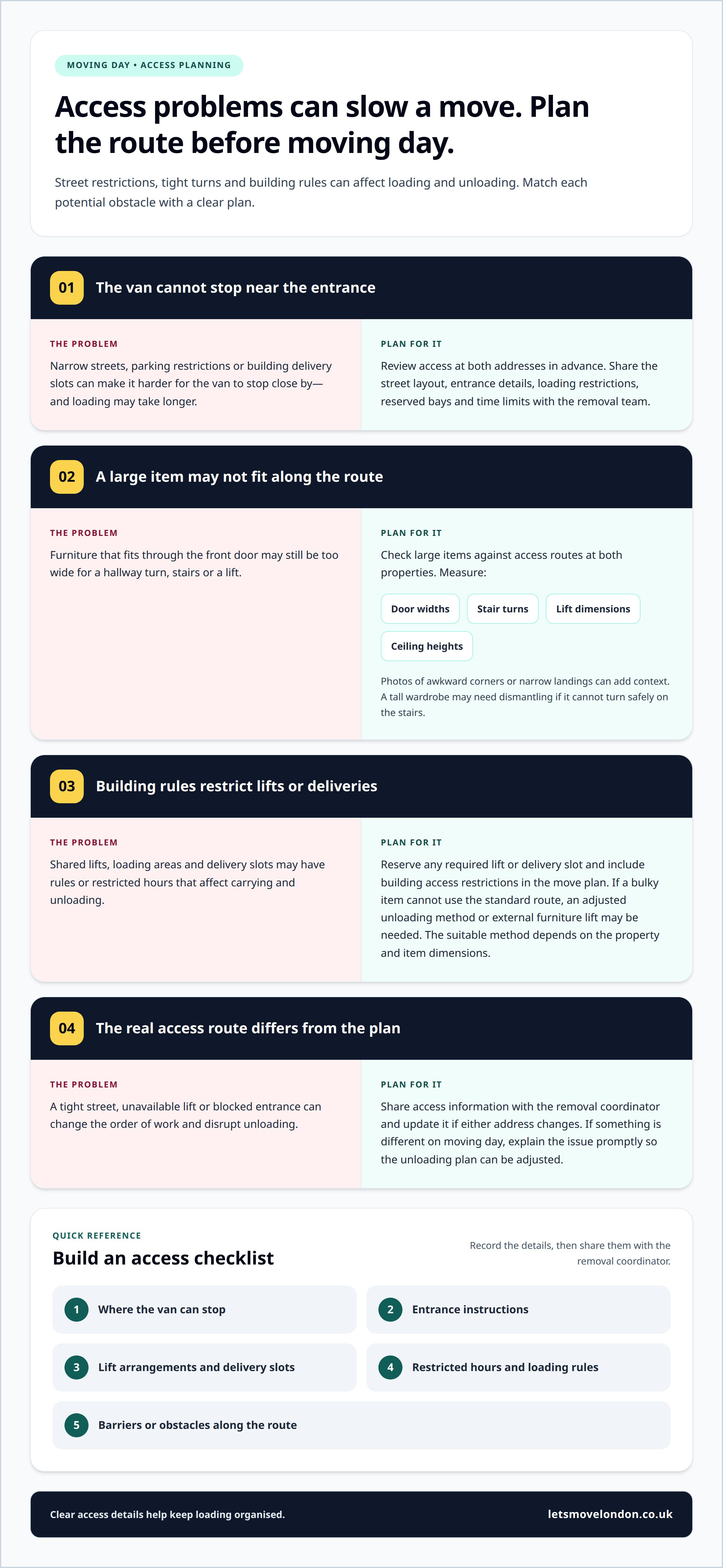
If a removal van cannot stop near the entrance, loading may take longer. Narrow London streets, parking restrictions and building delivery slots can all affect the schedule. The removal team can plan around these constraints by reviewing access at the collection and delivery addresses in advance. Details about the street layout, entrances and time restrictions help the team plan arrival and unloading.
Furniture that fits through the front door may still be too wide for a hallway turn or lift. Before moving day, the team can assess large items against the access routes at both properties. Measure door widths, stair turns, lift dimensions and ceiling heights. Photos of awkward corners or narrow landings can provide useful context. For example, a tall wardrobe may need dismantling if it cannot turn safely on the stairs.
Building rules can create another obstacle. A reserved lift or delivery slot may be essential when residents share lifts or loading areas. Include these arrangements in the move plan and identify any access restrictions that could affect carrying. If a bulky item will not fit along the standard route, an adjusted unloading method or external furniture lift may be needed. The suitable method depends on the property and the item’s dimensions.
An access checklist can prevent last-minute surprises. Record where the van can stop, entrance instructions, lift arrangements, restricted hours and barriers along the route. Share these details with the removal coordinator, and update them if either address changes. On moving day, the team can follow the agreed route and keep loading organised. If access is different from what you expected, explain the problem promptly so the unloading plan can be adjusted. A tight street, unavailable lift or blocked entrance may change the order of work, so clear communication helps the team respond efficiently.
4. How can I prevent delays when moving house in the UK?
Begin planning at least eight weeks before moving day. This gives a professional removal team time to coordinate the move, plan the route and account for possible disruption. Congestion, weather and property access can affect timings, so leave room in the schedule to adapt. Check the forecast for both locations in the days before moving, especially for longer journeys. A moving checklist also helps you track practical tasks instead of leaving everything until the final days.
Property completion can affect when the removal team can unload. Keep your solicitor, estate agent and removals coordinator connected, with a clear communication chain established at least 48 hours before moving day. If keys are delayed, tell the coordinator promptly so the team can adjust its schedule. Delayed keys may arrive as late as 5pm, while a delay past 4:00 PM can mean legal completion waits until the following working day. Keep essential items separate in case access to the new property changes.
Allowing a week between exchange and completion can reduce pressure, particularly when your move involves a property chain. Professional movers can plan routes and time estimates realistically, then account for unexpected delays. Confirm the collection and delivery arrangements, contact details and key handover plan before the move. If completion slips and belongings cannot be delivered that day, secure storage can provide a place for them overnight. OneDome research found that 28% of buyers had experienced temporary living arrangements because of moving delays.
Prepare for a short gap before everyday services are ready. Broadband may take several days to become available after moving in, so plan around that timing. Keep a first-night bag and key documents with you, rather than relying on boxes arriving before access is settled. If a delay creates a gap between homes, consider what accommodation and storage arrangements would keep essential belongings accessible. Arrange your move with a professional team to plan transport and storage around your completion schedule.
Let's Move London: Moving
Let's Move London organises residential and commercial moves, with storage available when completion dates or access arrangements leave a gap. Its moving service can help households that need professional support transporting belongings, while storage is useful when possessions cannot go straight into the new property.
When discussing your move, share the date, property details and any expected access or key delays. This helps shape the arrangements around your needs, whether you need a move alone or storage as part of the plan. For a smaller move, man and van is another option.
If you’re preparing for a move or your plans have changed, contact Let's Move London to discuss the support you need.
Make your next move with a clear plan
Take a moment to decide what a successful moving day looks like for your household. You might want to keep work equipment accessible, settle children into their new rooms or know exactly where important documents are. These priorities can guide decisions if plans change and help you focus on what matters most.
Planning for common moving day problems and solutions is easier when you identify your priorities before the day gets busy. Keep key decisions together and update them if completion timings or access arrangements change. A simple, current plan gives everyone involved a shared reference.
For support with your upcoming move, contact Let's Move London to discuss the arrangements that suit your situation. Take the next step at your pace, with a clearer plan for the transition ahead.
Frequently Asked Questions
How can professional movers help make sure nothing important gets lost?
Professional movers can track belongings against an inventory and flag items that need separate handling. Keep passports, house keys, jewellery and medication with you instead of packing them in the van. At delivery, use your inventory to check that priority items have arrived before the team leaves. If something is missing, report it promptly and keep its box label and any relevant photographs.
How do professional movers help prevent items from breaking during a move?
Careful handling, suitable packing and a securely loaded van help reduce the risk of breakage. Let's Move London includes insurance with every move, and its team handles belongings with care. Tell the team before collection if an item, such as a framed mirror, is fragile so it can be handled appropriately. Photograph valuable or delicate possessions beforehand to keep a record of their condition.
What Are the Most Common Moving Day Disasters?
Late keys, blocked access, parking restrictions, damaged belongings and misplaced essentials can disrupt a move. In London, a van that cannot stop near the entrance may add carrying time, while a completion delay can prevent unloading. Common moving day problems and solutions are easier to manage when everyone knows how updates will be shared. A clear communication plan helps the team respond promptly to changes.
How can a removal company help you prepare for moving day?
A removal company can plan your move around the property, belongings and access arrangements. Give the coordinator a single contact number and explain any special handling needs, such as an antique cabinet or essential work equipment. Agree how to share updates if timings change. For London moves, mention building rules and any collection or delivery restrictions so they can be included in the plan.
What should I expect from a removal company if its movers are late?
If the movers are late, call the removal company using the number provided for your booking. Ask for an updated arrival estimate and explain any fixed constraints, such as a building delivery slot or key collection arrangements. Keep your phone available and pass any timing changes to the person managing access. This gives the team the information it needs to coordinate the next steps.
What are the most common problems on moving day in the UK?
Common moving day problems and solutions often involve delayed completion, difficult parking, restricted building access, bad weather, or belongings that are damaged or hard to find. Completion delays can also leave a household without immediate access to its new home. Keep essential documents, medication and overnight necessities separate, and promptly tell the removal coordinator about changes to keys or property access.



Comments