
House Moving Quotations: How to Compare a London Move in 2026
Updated: Oct 5
Could the lowest house moving quotation leave you with the biggest questions on moving day? A figure is useful only when it reflects the move you’re actually making, including the volume of your belongings, the distance and the practical details at both addresses.
It’s easy to compare totals and miss differences in what each offer covers. In London, narrow streets, restricted parking and difficult access can affect how collection and delivery are planned. Describe these details clearly so the quotation reflects the job and the moving team has a practical picture of both properties.
This guide explains what to look for in a house moving quotation, which details can affect it and how to compare offers on a like-for-like basis. You’ll also learn how to account for services such as packing or storage, plus access and parking arrangements. Let's Move London's residential removals include a dedicated moving team and specialist transit vehicles. A clear quotation helps you understand the planned service and prepare for your move.
Table of Contents
House moving quotations: what a clear quote helps you decide
A house moving quotation is a project-specific outline of the removal service and its charge. It should give you enough detail to understand what the proposed work covers, rather than leaving you to judge an unexplained total. Two quotations can look similar in price while describing different levels of service.
The details behind the figure make it relevant to your move. An inventory gives an indication of the goods to be moved, and the distance between collection and delivery addresses helps shape a residential removal quotation. The agreed scope, including whether you want packing or storage, clarifies which work the quotation covers. A moving company may provide different types of services, so focus on the specific arrangement described for your home.
What is usually described in a house removal quotation?
A clear quotation should relate to your inventory, collection and delivery addresses, and the service you’ve requested. Residential removals include a dedicated moving team and specialised transit vehicles. The specific work covered depends on the requirements agreed for your move, so check what is included and what is optional.
Fixed quote or hourly service: which suits the move?
Residential removal quotations are based on the volume of goods and the distance between addresses. This project-specific approach suits a full household move, where the inventory and route help define the job. Consider the quoted amount alongside the service scope to see how the proposed removal fits your move.
What affects house moving quotations in London?
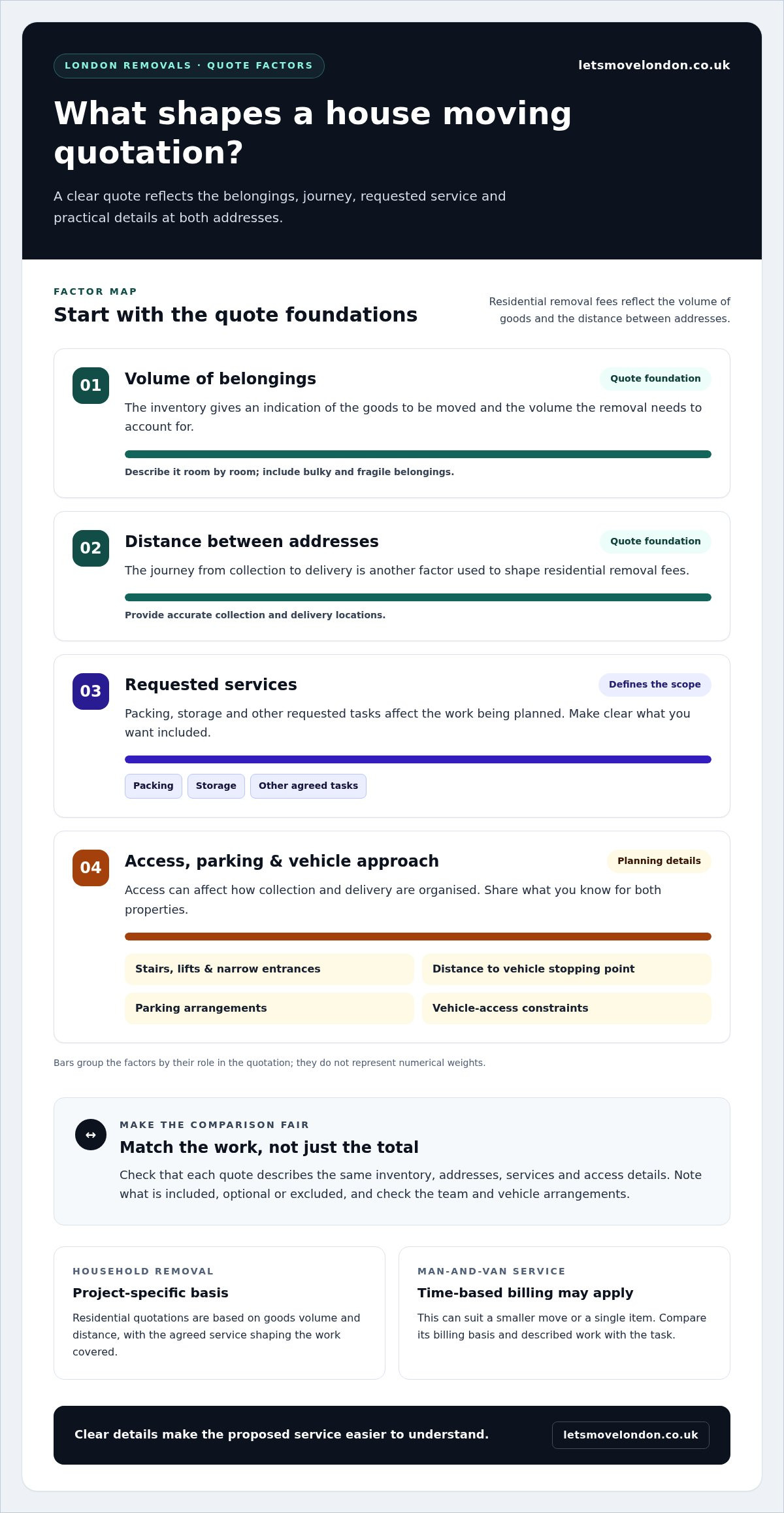
Residential removal quotations are shaped by the volume of belongings and the distance between the collection and delivery addresses. A clear description of both helps reflect the actual move rather than a generic estimate. The requested service matters too. Packing and storage can add work to plan, so include them when describing the scope you need.
How inventory, distance and services shape the scope
Prepare a room-by-room inventory, including bulky items such as wardrobes and fragile belongings that may need particular handling. It doesn’t need to be complicated, but it should give a realistic picture of what’s moving. Describe both addresses accurately, since the distance between them is one factor used to shape residential removal fees.
Be clear about any packing or storage you want included. These requests affect the work being planned, and leaving them out makes it harder to compare quotations on equal terms. The British Association of Removers provides further information about the removals industry and professional standards.
Why London access details matter to the quotation
Access can affect how a move needs to be organised. Stairs, lift arrangements, narrow entrances and the distance from the property to the vehicle’s stopping point help describe the practical work involved. Share what you know for both addresses, including steps, lift restrictions or longer carrying routes.
Give clear details about parking and vehicle access at collection and delivery. Arrangements vary across London, so describe what you know about each location rather than assuming access will be straightforward. This information helps the team plan the move, crew and specialist transit vehicles around the properties.
Note stairs, lift access and narrow entrances.
Describe the distance between the property and the vehicle’s stopping point.
Share known parking arrangements and any vehicle-access constraints at both addresses.
For broader local moving context, read the London moving advice. Include accurate inventory, service and access details when preparing for a residential removal with Let's Move London. This gives your quotation a clearer basis and helps you compare what each proposed service covers.
How to compare house moving quotations fairly
Start with the work described, not the headline total. If one quotation covers a different inventory, route or set of services, the figures aren’t like for like. Compare residential removal quotations with other residential removal quotations. An hourly man-and-van service uses a different billing basis and may suit a different type of move.
A like-for-like checklist for comparing removal quotes
For example, don’t compare a quotation that includes packing as if it covered the same work as one for transport only. Also check that each quotation uses the same inventory and addresses. Residential removal fees at Let’s Move London reflect goods volume and distance, with a dedicated moving team and specialist transit vehicles included in residential moves.
How to spot unclear quotation scope
Look for missing collection or delivery addresses, broad descriptions such as “house contents”, or requested tasks that aren’t clearly marked as included, optional or excluded. These gaps leave room for different assumptions. Two totals may appear comparable while covering different work.
A documented scope also gives you a clear reference if the move details change. You can identify which part of the original plan has changed instead of relying on memory or assumptions about what the quotation covered. The value is in being able to see the agreed details and describe what has changed.
Keep the comparison practical and specific. The UK Consumer Rights Act 2015 includes a requirement for services to be performed with reasonable care and skill. This is separate from comparing quotation scope, so read the described work and terms together before deciding. Clear house moving quotations help you weigh each offer against the move you need, not just its total.
How to request an accurate house moving quotation
Good preparation makes it easier to describe your move clearly and receive a quotation tailored to the job. Gather the information before submitting your request, then review the written scope against your plans. This can help you spot missing details while there’s still time to clarify what the move involves.
Prepare the details before requesting your quote
Start with the collection and delivery addresses and your preferred move date. Make a room-by-room inventory, noting bulky, fragile or unusual belongings so the scale and handling needs are clear. Add access information for both properties, such as stairs, lift arrangements, narrow entrances, carrying distances and known parking or vehicle-access details.
Then list the services you need. Separate essential requirements from optional requests, such as packing or storage. Including these in your initial description helps the quotation reflect the work you have in mind.
Addresses and timing: Provide both locations and your preferred move date.
Inventory: List belongings by room and highlight items that may need special handling.
Access: Describe relevant property and vehicle access details at collection and delivery.
Services: Identify required tasks and distinguish them from optional requests.
For extra preparation support, explore London moving advice and checklists.
Review the quotation before you book
Read the quotation alongside the details you supplied. Check that the addresses, inventory, preferred timing and requested services match your plans. Look for a clear description of the work, including what’s included, what’s optional and any stated exclusions. If your move details have changed, make sure the quotation reflects the updated scope before deciding.
This final review helps you compare the offer fairly and avoid relying on assumptions. Keep a copy of the move information you submitted so you can refer to the same details as you plan.
Once your move details are ready, you can request a tailored house moving quotation from Let's Move London. A clear starting brief helps the team plan around your belongings, addresses and requested services.
Get a tailored house moving quotation from Let's Move London
Once you’ve gathered your move details and compared what each quotation covers, you can choose with a clearer understanding of the service being planned. A tailored quotation is based on your actual move, not a one-size-fits-all figure. Provide accurate information about your belongings, both addresses and the services you need, then review the scope before booking.
What to expect from a Let's Move London house move
Let's Move London's residential removal fees reflect the volume of goods and the distance between collection and delivery. Residential moves include a dedicated moving team and specialised transit vehicles. Sharing a complete inventory and practical details about both properties helps the team plan around the specific move.
Packing and storage can also form part of your moving plan. Include the services you want in your request so the quotation can reflect the work you’re considering. When reviewing it, check that the listed requirements match your plans and that you understand the described scope.
Take the next step with your moving details ready
Before requesting house moving quotations, bring together the details that describe your move:
A room-by-room inventory, including bulky, fragile or unusual belongings.
Collection and delivery addresses, plus relevant access and parking information.
Your preferred move date and the services you need, such as packing or storage.
These details help shape a quotation around the volume of your belongings, the distance and your requested service. If your plans change, update the information so the quotation continues to reflect the move you intend to make.
Find out more about Let's Move London and prepare your details for a tailored house moving quotation.
Move forward with a clear plan
The most useful house moving quotations reflect the move you’re actually making. Share a realistic inventory, accurate collection and delivery addresses, access details and the services you need. Then compare each quotation’s scope, including what’s included, optional or excluded, rather than choosing by the total alone.
For residential removals with Let’s Move London, fees are based on the volume of goods and the distance between addresses. Your move includes a dedicated team and specialised transit vehicles. Clear details help shape a quotation around your requirements and support practical planning for collection and delivery.
With the key information ready, you can assess the proposed service with greater confidence and choose an arrangement that fits your move. To get started, request your tailored house moving quotation.
A well-planned move starts with a clear picture of what needs to go, where it’s going and the support you need. Prepare those details and you’ll be in a stronger position to move ahead with confidence.
Frequently Asked Questions
What should a house moving quotation include?
A useful house moving quotation should describe the move it covers, including the inventory, collection and delivery addresses, and requested services. Check how packing or storage is represented, and note the team and vehicle arrangements stated for the move. The clearer the scope, the easier it is to understand what you’re comparing. Make sure the written details match your plans before deciding, rather than relying on the total alone.
How do I compare house moving quotations fairly?
Use the same inventory, addresses and requested services as your baseline when comparing house moving quotations. Check which tasks are included, optional or excluded, and record the team and vehicle arrangements described. A lower total may reflect a narrower scope, so compare residential removal quotations with other residential removal quotations rather than directly against hourly man-and-van billing. For a London move, include known access and parking details for both properties.
Why do house moving quotations vary?
Quotations vary because moves differ in the volume of belongings, distance between addresses, property access and requested services. Packing or storage can also change the work being planned. Before comparing offers, check they’re based on the same inventory and collection and delivery locations. Let’s Move London bases residential removal fees on goods volume and move distance, so accurate details help tailor a quotation to your London move.
Can I get a house moving quotation without a home survey?
Whether a home survey is needed depends on the move and how its inventory and property details can be assessed. Prepare a room-by-room list of belongings, both addresses, access information and any packing or storage requirements. This gives a clear account of the job, whether details are gathered remotely or during a survey. If you use an online enquiry route, be specific about the contents and access rather than relying on a rough estimate.
What details should I provide to get an accurate moving quotation?
Provide the collection and delivery addresses, your preferred moving date and a room-by-room inventory. Describe access at both properties, including stairs, lift arrangements, carrying distances and known parking details. Identify bulky, fragile or unusual belongings, and list any packing or storage you need. These practical details describe the move clearly, including the volume of goods and the route, so the quotation can reflect the service you’re planning.
Is a fixed house removal quotation the same as an hourly man-and-van quote?
No. A residential removal quotation is based on the move’s scope, including goods volume and distance. Let’s Move London’s residential removal fees use these factors, with a dedicated moving team and specialised transit vehicles included. An hourly man-and-van service is billed by time and can suit a smaller move or single-item delivery. Consider the size of the job and the service described; the two quotation formats aren’t directly equivalent.
When should I request a house moving quotation?
Request a house moving quotation when you can share a useful inventory, both addresses and your preferred moving date. You can start preparing before every detail is final, but include what you know about property access, belongings and requested services. This helps clarify the scope. If your plans change, update the move information so the quotation reflects the inventory, distance and services you expect to need.



Comments