
Furniture Damage Claims After a London Move: What to Do
You unpack after a London move and spot a fresh scratch on a favourite table. Was it there before the move, caused during handling, or noticed only once everything was in place? With furniture removals london, a clear record can help you explain what you found and decide what to do next.
It’s understandable to worry that missing photos, incomplete paperwork or a delayed report could make a claim harder to resolve. Start by recording the damage and timeline as accurately as you can, then keep your moving documents and correspondence together. Your removal agreement sets out the relevant reporting process, so check its terms before taking the next step.
This guide explains what to photograph, which details to note and how to raise your concerns calmly and factually. You’ll also learn how to consider possible next steps without assuming a particular outcome, and how careful preparation can reduce the risk of damage and misunderstandings on a future move.
Table of Contents
Furniture Damage After a London Move: First Establish What Happened
Finding a fresh scratch, dent, broken fitting or wobbly leg after a move can be upsetting, especially when you’re unsure whether it was already there. A furniture damage claim is a documented request for the removal company to review damage you believe may be linked to the move. A clear timeline and reliable evidence help separate what you observed from what you can’t yet know about the cause.
First, record the item’s condition before you alter it. Don’t repair it, discard it or move loose pieces unnecessarily before documenting what you found. This gives you a useful starting point for discussing the damage. For broader preparation advice, read our London removals guidance.
For a practical overview of furniture protection during a move, watch this video:
How to tell fresh damage from existing wear
Compare the affected area with any pre-move photographs, inventory entries or condition notes. A close-up may show a new chip, while a wider image helps identify exactly where it is on the item. Record where the furniture was when you found the damage and when you first noticed it. If you can’t tell whether a mark is new, say so. A careful account is more useful than presenting a guess as fact.
Keep evidence and interpretation separate. For example, “the table was against the hallway wall when I noticed a dent on its right edge” describes an observation. “The dent happened on the stairs” suggests a cause you may not have seen.
Which London move details belong in your timeline?
Note collection and delivery times, handover points, and who was present or saw the item before and after transport. Include relevant access details, such as stairs, lifts, narrow corridors and shared areas, without assuming that any one feature caused the damage. For a move involving furniture removals london, this context can help explain how the item travelled through the property and where its condition was checked.
Keep your notes, photographs and moving documents together. If you’re reviewing the agreement or information about cover, remember that insurance arrangements vary. This overview of understanding moving insurance explains the general concept of protecting goods in transit, but it doesn’t establish what applies to your move. Check your own moving documents for the relevant terms.
How to Document Furniture Damage for a Clear Claim
A well-organised record makes it easier to explain what you found and when. Work through five steps: photograph the damage, describe it neutrally, date your notes and images, preserve relevant items and paperwork, then report the issue using the process in your move documents. Keep copies of everything you send.
Photograph: Take a clear image of the whole furniture piece, then close-ups of each damaged area. Include a familiar object or ruler for scale where useful.
Describe: Note the item, the damage’s location and its visible condition without assigning blame.
Date: Record when you found the damage and when you took each photograph.
Preserve: Keep packaging, detached parts and relevant documents together.
Report: Send a factual account through the contact or claims process set out in your move agreement.
A useful damage record identifies the item, its visible condition and when you discovered the damage. Those details make your report specific, rather than relying on a general statement that furniture arrived damaged.
What photographs and written notes should include
Capture the full piece so its identity and overall condition are clear. Then photograph every affected area closely enough to show the detail, and keep the original image files. Avoid filters or edits that could obscure the condition. In your notes, use plain descriptions such as “a 3 cm chip on the left front edge”. Don’t state that a particular person or part of the journey caused the damage unless you directly observed it.
Keep packaging and any detached screws, fittings or fragments. They may help show the item’s condition and how it was packed or protected. Don’t discard them or make repairs before you’ve documented what you found.
Which records can help explain the timeline?
Gather the inventory, booking documents, relevant messages and any pre-move condition notes. Save a dated copy of your damage report and the responses you receive. A simple timeline can help: note the collection and delivery details, when you inspected the item and when you first noticed the damage. This can be especially useful when planning furniture removals london, where several handovers or access points may form part of the move.
If you’re considering the legal position, read the Consumer Rights Act 2015 and check how it applies to your circumstances. The Act addresses services carried out with reasonable care and skill, but the outcome of an individual claim depends on its facts, evidence and agreement. Check current guidance and your contract before relying on a particular right or deadline.
Clear packing and preparation can also help reduce avoidable damage. If you’re organising a future move, plan your next London removal with item condition and access details in mind.
Furniture Damage Claims: Compare Practical Routes to Resolution
There’s no single route that suits every damage concern. Your next step depends on the move agreement, the evidence you have and the response you receive. A request for review does not guarantee compensation. Keep the discussion focused on what happened, what you can show and what resolution you’re asking the company to consider.
These options can help you decide how to proceed after furniture removals london, while keeping the conversation clear and constructive.
When a direct written report is a sensible first step
A concise message can set out the facts without assigning blame. Identify the furniture, describe the visible damage, state when you discovered it and attach relevant photographs or notes. Ask the company to review the information and explain the next step under the agreed process. Keep the original message, attachments, acknowledgement and reply together, with their dates.
If you’ve already spoken to someone, a brief written follow-up can help prevent misunderstandings. Summarise what was discussed and invite correction if you’ve misunderstood anything.
When to review terms or seek independent guidance
Before escalating, read the booking documents and relevant terms. They may describe how to submit a report, what information to provide and how concerns are handled. Don’t assume that a particular item or type of loss is covered, or rely on an unverified deadline. Check current UK consumer guidance if the issue remains unresolved or you’re uncertain how the terms apply.
Stay measured and specific at each stage. A clear written record helps everyone understand the concern, even though the final decision depends on the evidence and applicable agreement.
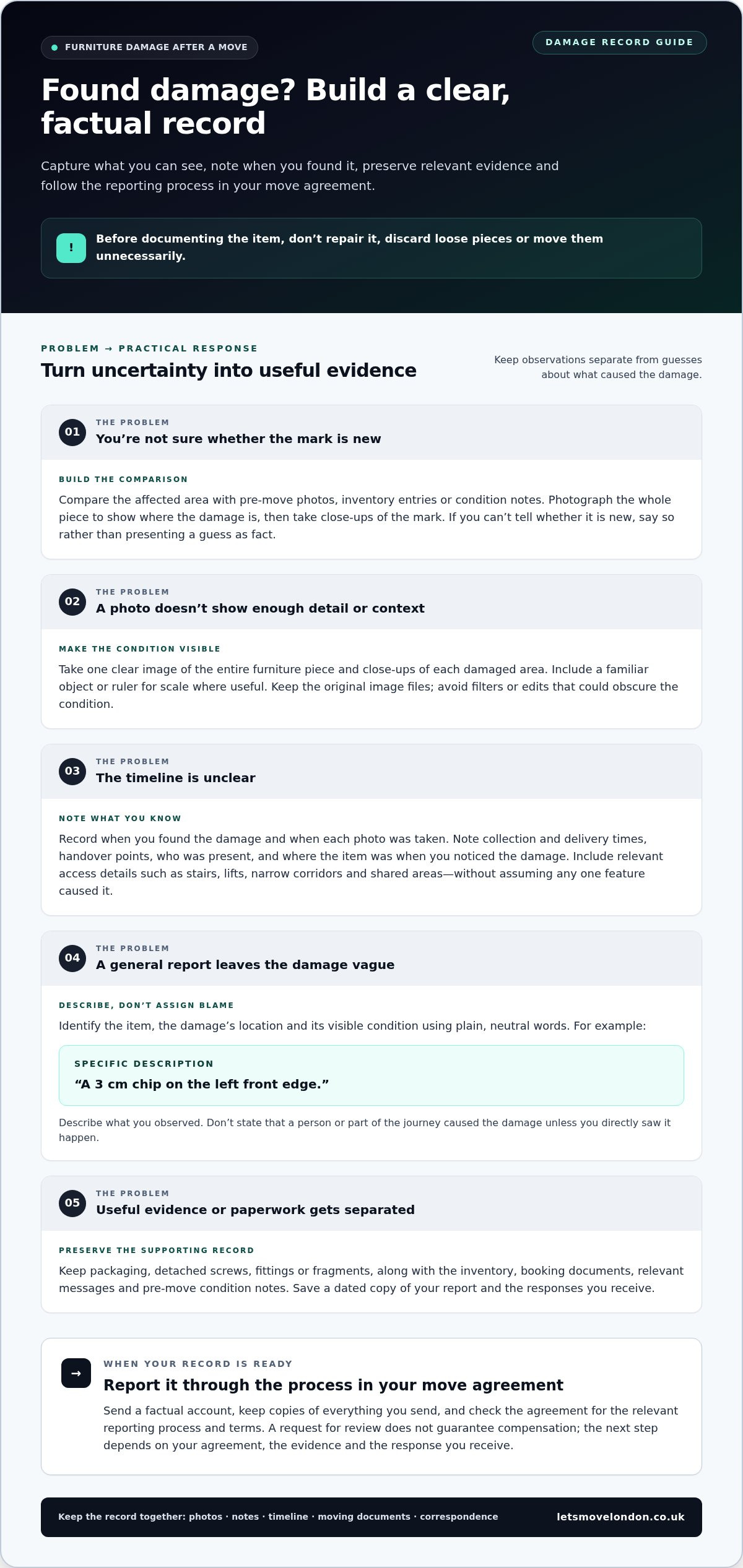
What to Do After Finding Furniture Damage in London
Finding damage during unloading or after the team has left can be stressful. A calm, consistent process helps you capture what you saw and raise the issue clearly. Don’t repair, clean or discard the item before documenting its condition, unless leaving it as it is would create a safety risk.
A same-day checklist for newly noticed damage
Act promptly and follow any reporting process in your move agreement. If you spot damage while furniture is being unloaded, pause and photograph it in place where it’s safe to do so. In a shared hallway, lift or communal entrance, capture the relevant surroundings too while respecting other people’s privacy.
Pause: Avoid moving or altering the item until you’ve recorded its condition, if safe.
Photograph: Take a full view and close-ups of the damage. Note where the item was when you found it.
Record: Write down the delivery stage, the time you noticed the issue and who was present. Separate what you observed from any theory about the cause.
Report: Send a concise written account through the communication channel set out in your agreement. Include relevant images and ask for confirmation that the report was received.
Retain: Keep the item, detached parts, packaging and moving paperwork until you’ve documented them and considered the next steps.
For example, state that you noticed a dent on a cabinet’s lower corner while it was being carried through a shared corridor. Don’t say that the corridor caused the dent unless you witnessed it happen.
How to keep the resolution process organised
Create one folder for photographs, messages, booking documents, condition notes and your written report. Keep files in date order, and save copies of your message and any acknowledgement or reply. This makes it easier to refer to the same details if the company asks follow-up questions.
If an inspection, repair assessment or other follow-up is discussed, record what was agreed and when. Ask for a clear outline of the next step in writing, including who will respond or what information is needed. Acknowledgement confirms receipt, not a particular decision or outcome.
Stay factual and keep expectations proportionate. Any resolution depends on the available evidence and the applicable terms of your move agreement. An organised approach can make the process easier to follow, without assuming that repair, replacement or reimbursement is guaranteed.
Planning another move? Explore London moving advice to help prepare for a smoother relocation.
Prevent Furniture Damage on Your Next London Removal
Good preparation helps protect furniture and makes handovers clearer. Record the condition of valuable or delicate pieces before moving day, tell your removal team about special handling needs, and plan how each item will pass through the property. This matters for furniture removals london, where stairs, lifts and tight access can affect how bulky items are moved.
Prepare furniture and record its starting condition
Take photographs of existing marks, fragile finishes and unusual shapes before the move. Note which item each image shows and point out details such as a loose leg or delicate glass panel. A clear record helps distinguish pre-existing wear from damage noticed later.
Check removable parts: Where appropriate, detach shelves, legs or handles. Keep fittings together and label them so they can be matched to the right item.
Protect vulnerable areas: Use suitable packing and protection for corners, edges and delicate surfaces. Avoid applying tape directly to finishes that could be marked.
Share handling notes: Tell the moving team which pieces need particular care and explain any known weaknesses before loading begins.
For more advice on preparing a London relocation, read this London removals planning guide. If you are organising a long-distance relocation or want expert packing and handling insights, discover Execu-Move for practical moving advice.
Plan London access and communicate special handling needs
Measure larger furniture and compare its dimensions with doorways, stair turns, corridors and lifts at both addresses. Consider the route from the property to the loading point too. Narrow communal areas, limited lift space or difficult loading access can affect the safest way to move an item. Share these details during planning rather than leaving the team to discover them on the day.
Make a short list of oversized or delicate pieces and note any access constraints. That gives the removal team a clearer picture of the work and supports careful, efficient handling. Include the route and room-by-room plan in your move arrangements so the team can prepare for the property’s practical requirements.
Let's Move London provides residential removals across London and surrounding counties. Dedicated moving teams handle household belongings with care, and quotes are tailored to the move’s volume and distance. Share your furniture and access details when planning so the arrangements reflect the practical needs of your household move.
Plan Your Next London Move with Confidence
If you find furniture damage after a move, keep your response calm and evidence-led. Record the item’s condition before changing it, build a clear timeline with photographs and relevant paperwork, then follow the reporting process in your move agreement. A factual written report can help clarify the concern, though it can’t guarantee a particular outcome.
For future furniture removals london, prepare delicate pieces, note existing marks and plan access through stairs, lifts and shared areas. Clear communication helps the moving team understand what needs careful handling and where extra planning may be useful.
Let's Move London provides residential removals across Greater London and surrounding counties. Dedicated moving teams handle household belongings with care, and residential removal quotations are tailored to your move’s volume and distance. With thoughtful preparation and a clear plan, you can approach your next relocation with greater peace of mind.
Plan your London move with Let's Move London and take the next step towards a more organised move.
Frequently Asked Questions
What should I do first if furniture is damaged during a move?
Pause and document the furniture’s condition before moving, cleaning or repairing it, if it’s safe to do so. Take photographs of the whole item and close-ups of the damage, then note when and where you discovered it. Record who was present and what you directly observed. Report the issue through the process in your move agreement, and keep a copy of your message and any reply.
How do I prove furniture was damaged during a removal?
No single photograph may prove exactly when or how damage happened, but a consistent record can help explain the timeline. Compare the item with pre-move photographs, inventory notes or condition records. Add dated images taken after discovery, a factual description, relevant messages and details of when the item was collected and delivered. Keep observations separate from assumptions, and follow the reporting process in your agreement.
How long do I have to report furniture damage after a London move?
There isn’t one reporting period that applies to every London move. The time limit or procedure may depend on your removal agreement, so check the relevant terms as soon as you notice damage. Report it promptly rather than waiting to establish exactly how it happened. Keep a dated copy of your report and check current UK consumer guidance if you’re unsure how the terms apply.
Can a removal company refuse a furniture damage claim?
A company may dispute or decline a request after reviewing the evidence and the terms of the move. Ask for its position and reasons in writing, along with an explanation of any further complaint process. Keep your report, photographs, agreement and correspondence together. A claim is a request to review the damage, not a guarantee of compensation, repair or replacement. The outcome depends on the circumstances and applicable terms.
What evidence should I include in a furniture damage report?
Include the item’s name or description, the location and appearance of the damage, and when you first noticed it. Attach clear photographs of the full piece and close-ups of affected areas. Add relevant inventory or condition notes, booking details, delivery information and messages. Keep original image files and a dated copy of what you send. A neutral, organised report helps the company understand the concern without relying on assumptions.
Should I repair damaged furniture before making a claim?
Usually, document the damage and report it before making repairs or discarding the item. Photograph the furniture as found, preserve detached parts and packaging, and check your agreement for the reporting process. Altering the item first could make its original condition harder to assess. If the damage creates an immediate safety risk, prioritise safety, record the condition as clearly as possible and explain any necessary action in your report.
What if the furniture damage was already there before the move?
Compare the mark with pre-move photographs, inventory entries or condition notes. If you can establish that it was already present, record that accurately rather than including it as new damage. If you can’t tell, state that the timing is uncertain and explain when you first noticed it. Clear distinctions between existing wear and newly observed damage support a more reliable account of your furniture removals london experience.
How can I prevent furniture damage during a London removal?
Photograph existing marks, secure or remove detachable parts where appropriate, and protect vulnerable edges and finishes. Measure large furniture and check that it can pass through doorways, stairs, lifts and corridors at both addresses. Share delicate-item and access details during move planning, including any loading constraints. For furniture removals london, preparing these details in advance helps the team plan careful handling and reduces avoidable confusion on moving day.


Comments