
Business Relocation in Covent Garden: A 2026 Guide to Choosing the Right Team
The move can be won or lost before the first box is lifted: in Covent Garden, building access can shape the schedule. If you’re searching for “business relocation covent garden”, you may be weighing loading arrangements, staff disruption and how to keep daily operations on track.
Those concerns are practical. Street access and building-specific rules for loading, lifts and parking can affect how a move needs to be planned. A suitable team should be able to discuss your premises, preferred schedule and the work required. That gives you a clearer basis for comparing quotes than relying on assumptions about what each one covers.
This guide offers a practical framework for choosing a business relocation provider in Covent Garden. It covers what to ask about scope and responsibilities, which access details to check with building management and the relevant authority, and how to organise staff, customers and operations around the move. The goal is a plan that fits your business and premises, with fewer avoidable surprises on moving day.
Table of Contents
Business relocation in Covent Garden: what makes a move work?
How to assess Covent Garden access, timing, and building logistics
Compare business relocation companies in Covent Garden with a clear checklist
Prepare a Covent Garden business move without avoidable disruption
Choose business relocation support in Covent Garden and agree next steps
Business relocation in Covent Garden: what makes a move work?
Moving a workplace puts pressure on more than the schedule. Staff need clear instructions, customers and suppliers may need updates, and essential work still needs to continue. A practical plan helps coordinate these priorities and gives prospective providers a consistent brief for your business relocation covent garden.
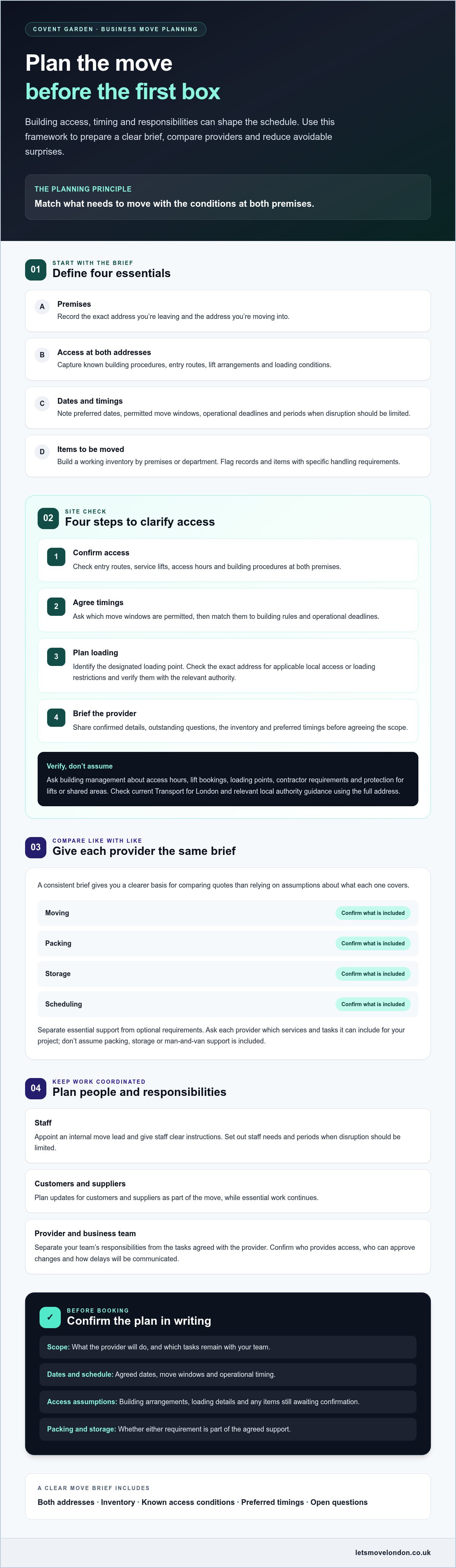
Build the plan around four details: the premises you’re leaving and moving into, access at both addresses, available dates and timings, and the items to be moved. Covent Garden is in central London, so don’t assume a vehicle can stop wherever is convenient or that building facilities are available without prior arrangement. Use this guide to prepare questions and compare providers, then verify arrangements for your specific premises.
For background on the area, watch this BBC Archive feature on Covent Garden’s redevelopment:
Which business move requirements should you define first?
Start with a working inventory rather than a rough estimate. List furniture and equipment by premises or department, note records that need careful handling, and flag items with specific handling requirements. Then set out preferred dates, operational deadlines, staff needs and periods when disruption should be limited. Providers can use the same information to understand and assess the job.
Separate essential support from optional requirements. Decide whether you need packing, storage or man-and-van support instead of assuming these are included in a commercial move. Ask each provider to confirm which services and tasks it can include for your project.
Why can Covent Garden premises affect move planning?
Access arrangements can differ between nearby buildings. Ask building management about permitted access hours, lift booking procedures, loading points and contractor requirements. Check the exact addresses for any applicable local access or loading restrictions, and confirm the details with the relevant authority rather than relying on assumptions. For area background, see this overview of logistics in Covent Garden.
Summarise what you learn for potential providers: both addresses, the inventory, known access conditions, preferred timings and questions still awaiting confirmation. A useful plan connects what needs to move with the conditions at each site. Before booking, confirm the proposed scope, schedule, access requirements and responsibilities.
How to assess Covent Garden access, timing, and building logistics
Start access planning with the exact address, not a general assumption about Covent Garden. Buildings may have different layouts, entrances and procedures, while local access or loading requirements can depend on the street and site. For a business relocation covent garden plan, verify building arrangements with management and check current guidance from Transport for London and the relevant local authority.
Use this four-step check to turn your findings into a practical move brief:
Confirm access: Check entry routes, service lifts, access hours and building procedures at both premises.
Agree timings: Ask which move windows are permitted, then match them to building rules and operational deadlines.
Plan loading: Identify the designated loading point and verify any address-specific restrictions with the relevant authority.
Brief the provider: Share confirmed details, outstanding questions, the inventory and preferred timings before agreeing the scope.
What should you confirm with the building manager?
Ask about permitted move hours, service-lift availability, booking procedures and requirements for protecting lifts or shared areas. Check whether loading areas, corridors or other shared spaces need advance coordination. Confirm who will provide access on the day, who can approve changes and how delays will be communicated. Record the answers so your provider can plan using confirmed information.
How do you check local access requirements for the address?
Use the full address to check current Transport for London and council guidance if vehicle access or loading could be affected. Don’t assume one rule applies to every Covent Garden street. Ask the provider what information it needs to assess vehicle access and timing, such as the loading location, route details or building instructions. Verify any permit or parking arrangements separately, and don’t assume they are included in a moving quote.
For wider neighbourhood context, read this London neighbourhood guide. For workplace planning, the Canadian Centre for Occupational Health and Safety provides a useful office relocation health and safety checklist. It can help you consider safety alongside access, scheduling and building procedures.
Keep one concise logistics sheet with confirmed timings, access instructions, loading details, provider contacts and outstanding checks. A London-based moving company such as Let’s Move London can discuss the proposed scope and the information needed for your move. Confirm responsibilities and site arrangements before booking.
Compare business relocation companies in Covent Garden with a clear checklist
Compare like with like. Give each provider the same inventory, addresses, preferred dates and confirmed building-access information, then ask for a written explanation of the proposed scope. This makes it easier to spot differences in assumptions, such as whether packing or storage is included, and assess whether the plan fits your business relocation covent garden requirements.
Use this checklist to compare responses. Ask each provider to confirm availability for your preferred dates and clarify anything that has not yet been agreed.
Moving services: What moving work is proposed, and which items or locations does it cover?
Packing: Is packing available for your project? Which items or tasks are included, excluded or still to be confirmed?
Storage: Is storage required, and what arrangements are proposed? Confirm the scope and responsibilities.
Access planning: Which building and loading details has the provider considered? Which site arrangements must you verify separately?
Scheduling: Does the proposed schedule fit your dates, operating needs and building procedures? How would changes be handled?
Responsibilities: Who owns each agreed task, and what information or coordination must your business provide?
What should a commercial relocation quote explain?
Check that the quote reflects the inventory, both locations, proposed dates and access conditions you shared. Ask which packing, storage and handling tasks are included, excluded or subject to confirmation. Make sure assumptions are visible, especially if building access or loading details are not settled.
Clarify how a change to the inventory, timings or site arrangements could affect the agreed scope. Ask who needs to be told and how an updated plan will be confirmed. A clear written response lets you compare quotes by their actual scope, not just their headline figures.
Which provider questions reveal whether the fit is right?
Ask how the provider would plan around your operating requirements and periods when disruption should be limited. Discuss how information will be coordinated with building management, staff and any other contractors involved. Ask how the team will assess the inventory, premises and business-specific handling needs. You can also request commercial move examples or references where these can be substantiated.
For broader planning considerations, consult this London office relocation guide. Once you have a consistent brief and know what still needs confirming, you can discuss your business move with a London-based provider. Before booking, confirm the proposed services, schedule, access assumptions and responsibilities for your project.
Prepare a Covent Garden business move without avoidable disruption
A practical move plan turns the agreed scope and site details into clear responsibilities. For a business relocation covent garden, set the sequence early: agree what the provider will handle, appoint an internal move lead, coordinate building access, brief staff and check readiness before moving day.
Keep your business’s tasks separate from the provider’s agreed work. Your team may need to manage staff communications, internal records and building contacts, while the provider’s responsibilities should be set out in the confirmed moving scope. Don’t assume a task is covered unless you’ve agreed it.
What should the business organise before move day?
Assign an owner to each internal task, including staff updates, the inventory, building coordination and essential equipment. Agree a labelling system that identifies each item’s destination room or workspace. Share room names or a layout with the provider so placement instructions are clear.
Plan how staff will access essential records, devices and supplies during the transition. Decide what must remain available until operations pause, what should travel separately under your team’s control, and who will check that priority items arrive where they are needed.
How can you make move day easier to coordinate?
Before the move, confirm the agreed arrival time, access contacts, vehicle arrangements and sequence of work with the provider. Prepare a contact list for your move lead, building representatives and the provider’s nominated contact. Agree how urgent decisions and schedule changes will be raised, recorded and confirmed, so staff aren’t working from conflicting updates.
Before unloading begins, check that delivery areas and priority workspaces are ready and accessible. If a room or route has changed, tell the provider’s contact and confirm the revised instruction before items are placed. Keep a brief record of decisions and outstanding tasks.
Business team: Own staff communications, internal task allocation, essential records and agreed building contacts.
Relocation provider: Handle only the moving tasks, schedule and responsibilities agreed for the project.
Move lead: Maintain the contact list, share verified updates and direct urgent questions to the right person.
For broader preparation, consult this London removals planning guide. To discuss a business move and clarify what support may suit your requirements, contact Let’s Move London.
Choose business relocation support in Covent Garden and agree next steps
The right provider is the one whose confirmed scope fits your premises, schedule and operational needs, not simply the one whose initial proposal sounds broad. For a business relocation covent garden, make your final decision after checking responsibilities, access assumptions, agreed dates, and packing or storage requirements. Get these details in writing so everyone is working from the same plan.
Let’s Move London is a London-based company offering commercial relocations, moving and storage. Requirements vary by project, so confirm which services and tasks are available for your move rather than assuming they are included.
What information should you provide when requesting a quote?
Give each provider a consistent brief. Include both addresses, preferred dates, an inventory of furniture and equipment, and any building-access arrangements already confirmed. Flag business-critical equipment or records, packing needs, storage requirements and operational constraints, such as work that must remain available during the move. Identify access details that are still unconfirmed.
Ask whether a site assessment is needed to confirm the proposed scope and schedule. This gives the provider a chance to identify missing information before you rely on the plan. Confirm what further details are needed and who will arrange any building or access checks.
What should be agreed before confirming the move?
Review the written proposal against your brief. It should make clear which services are agreed, who is responsible for each task, the planned timings and any assumptions about access or inventory. Check that packing and storage requirements are accurately stated, including anything excluded or awaiting confirmation.
Agree how changes, access issues and timing updates will be raised and confirmed. Keep one current move plan available to your internal move lead, building contact and relocation provider. Include key contacts, agreed dates, access instructions, outstanding checks and the process for recording decisions. Update the plan when details change, and make sure the relevant people know which version to follow.
A clear brief and written agreement help turn provider selection into coordinated next steps. Discuss your Covent Garden business move with Let’s Move London and confirm the project-specific scope, schedule, access requirements and responsibilities before booking.
Set your Covent Garden move up for a confident start
A successful business relocation covent garden starts with a plan built around the actual premises, access conditions and operational priorities. Compare providers using the same brief, then confirm the scope, dates, responsibilities and access assumptions in writing. Clear ownership and communication help staff know what to expect and keep the move organised.
Share your addresses, inventory, preferred schedule and known building arrangements when requesting a quote. Explain any storage needs and packing requirements, and confirm which services are available for your project before booking.
Let’s Move London is a London-based removal and storage company offering commercial relocation and storage among its services. Discuss your requirements directly to confirm the proposed scope and practical details for your move.
Discuss your Covent Garden business move and take the next step with a clear brief. Careful preparation can make the transition more manageable for your team and your business.
Frequently Asked Questions
How do I choose a business relocation company in Covent Garden?
Choose a provider whose confirmed scope fits your premises, schedule and business needs. Give each company the same inventory, addresses and access information, then compare its proposal for moving, packing or storage, timing and responsibilities. Ask how it will account for building constraints and business-critical items. A clear business relocation covent garden brief makes it easier to compare proposals and identify details to confirm before booking.
What should I check before moving an office in Covent Garden?
Check access at both addresses with building management and the relevant authority. Confirm permitted move hours, lift booking procedures, loading arrangements, access routes and any building requirements for contractors. Verify current local guidance using the exact address rather than assuming one rule applies throughout Covent Garden. Share confirmed details and unresolved questions with your provider so the proposed schedule and scope reflect the actual premises.
How can a business reduce disruption during a relocation?
Appoint an internal move lead and separate your team’s tasks from those agreed with the provider. Brief staff about timings, responsibilities and how to raise urgent questions. Identify essential equipment, records and supplies that need to remain accessible during the transition. Agree a sequence of work around business priorities, and keep one current move plan available to the internal lead, building contact and provider.
What information do removal companies need for a business relocation quote?
Provide both addresses, preferred dates, an inventory of furniture and equipment, and confirmed access or loading details. Flag business-critical items, operational deadlines, packing needs and whether storage may be required. Identify information you’re still checking, such as lift availability or building procedures. Ask whether the provider needs more details or a site assessment to confirm the proposed scope and schedule.
Can a business relocation company arrange packing and storage?
Providers may offer packing, storage or both, but availability and inclusions vary by project. Ask what can be provided, which items or tasks are covered, and what your staff would need to handle. Let’s Move London offers moving and storage, but confirm the specific commercial scope before booking. If packing is essential, ask directly whether it’s available for your move and have the answer recorded in the proposal.
When should a business book a Covent Garden relocation company?
Start contacting providers once your likely move dates and premises are known. This gives you time to compare proposals, clarify the scope and check building access arrangements. Ask directly whether a provider is available for your preferred dates, then confirm the schedule before making related arrangements. If dates or access details are provisional, explain that and agree how changes will be reviewed.
What should a business relocation quote include?
A useful quote should reflect the inventory, both locations, proposed dates and access information supplied. It should set out the agreed moving scope, included or excluded packing and storage, responsibilities, schedule and assumptions. Ask how changes to the inventory, timing or access arrangements will be handled, and how an updated proposal will be confirmed. Check unresolved items before booking so both sides understand what has and hasn’t been agreed.



Comments