
Ultimate London Moving Checklist: Stress-Free 2026 Guide
Updated: Aug 30
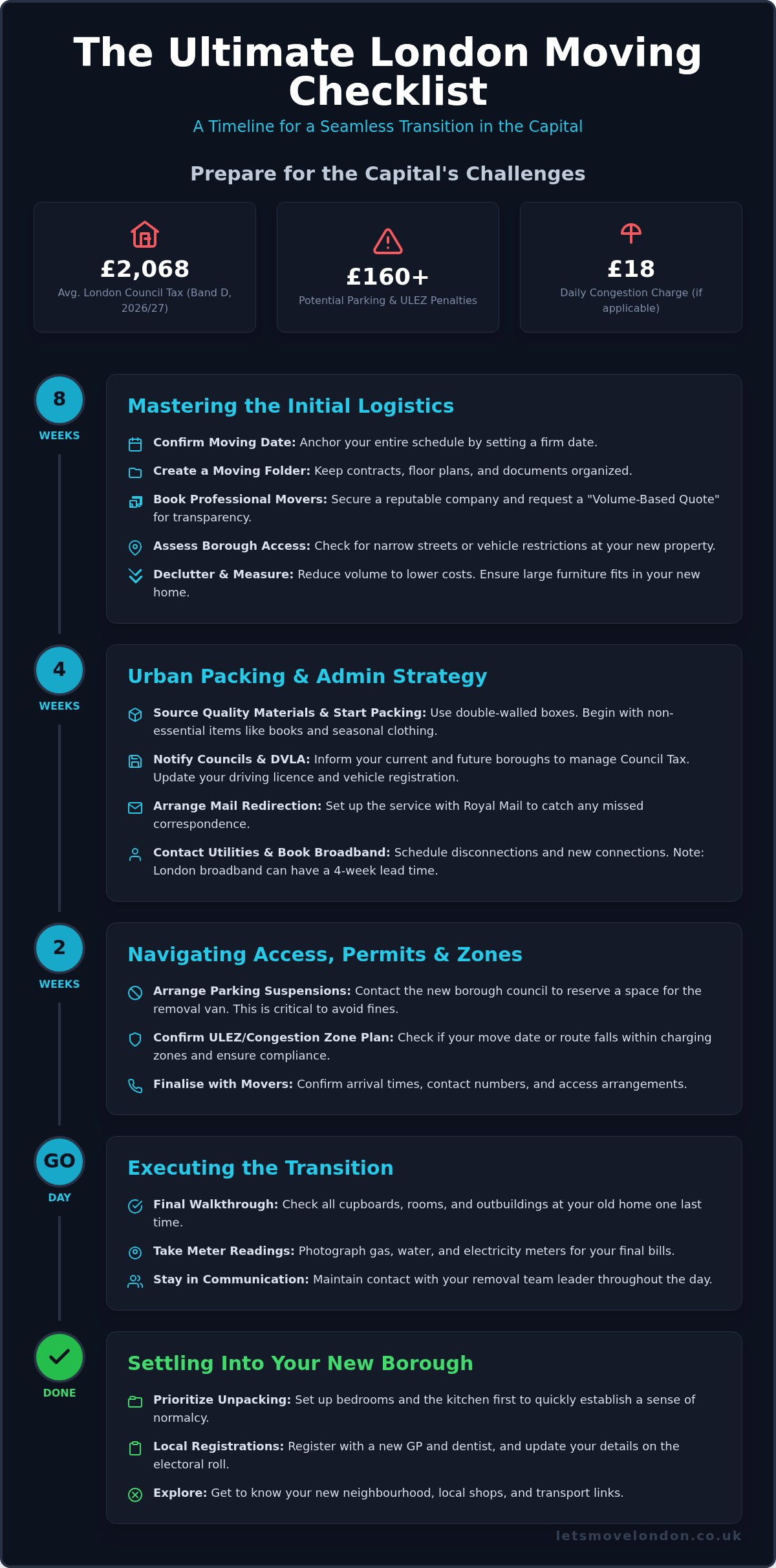
With the average London council tax rising to £2,068 for the 2026/27 period and ULEZ charges now strictly enforced across all 32 boroughs, the financial stakes of a disorganized move have never been higher. This moving checklist london guide ensures you don't fall victim to avoidable expenses or administrative delays. Moving house in the capital is a complex operation. You're likely worried about navigating high-traffic zones, dodging the £18 Congestion Charge, or receiving a £160 penalty for a parking oversight on moving day. It's a logistical puzzle that requires precision and local expertise.
We understand that your priority is a seamless transition into your new home. This roadmap eliminates uncertainty by providing a clear, timeline-based strategy tailored to the unique demands of 2026 London living. You'll learn how to coordinate borough-specific utility transfers, secure essential parking suspensions, and manage your move with quiet competence. Follow these steps to bypass the typical metropolitan stress and secure your peace of mind. Our guide prepares you for every challenge, from ULEZ compliance to the ending of EV exemptions, ensuring your arrival is as efficient as possible.
Table of Contents
8 Weeks Out: Mastering the Initial London Move Logistics
Success begins with a fixed timeline. Confirm your moving date immediately to anchor your entire schedule. Create a master moving folder, either digital or physical, to house your contracts, floor plans, and this moving checklist london. For those navigating the legal intricacies of property transactions in the capital, Feltons Solicitors LLP provides expert guidance to ensure your documentation is in order. Early preparation is your best defense against the capital's unique logistical hurdles. Research professional removals London to secure your preferred slot, especially for weekend moves which often fill up months in advance. A "Volume-Based Quote" is the gold standard for London moving transparency. It ensures you pay for the physical space your items occupy, providing a clear financial picture before the first box is even taped.
Choosing the Right Moving Service for Your Borough
The architecture of your new London borough dictates your logistical needs. Narrow mews or Victorian streets often require smaller vans due to strict height and width restrictions that larger lorries cannot navigate. Assess whether a fixed-quote residential removal service fits your large family home or if an hourly man and van is more economical for a smaller apartment move. Ensure your chosen team has specific experience with London property types. Navigating high-rise service lifts or the tight stairwells of period basement flats requires a level of skill that general movers might lack. This expertise prevents property damage and avoids costly delays on the day.
The Great London Declutter
Volume directly influences your moving costs and the size of the vehicle required. Audit every room to identify items you no longer need. Reducing your inventory before the surveyor arrives will lower your final quote. Identify local London charity shops or specialized recycling centers for disposal of high-quality goods. Measure your largest furniture pieces against the floor plan of your new home. If the wardrobe won't fit through a narrow hallway in a North London conversion, it's better to sell it now. Using a moving checklist london at the eight-week mark allows you to spot these potential issues early, saving you from paying to transport furniture that you'll eventually have to discard. This proactive approach guarantees a leaner, more efficient moving process.
4 Weeks Out: The Urban Packing and Admin Strategy
Four weeks before your move marks the transition from planning to active execution. This is the critical phase in your moving checklist london where administrative tasks and packing schedules converge. Start by sourcing high-quality moving boxes and industrial-grade tape. Standard supermarket cartons often fail under the weight of books or the humidity of a London basement. Invest in double-walled corrugated cardboard to protect your belongings during transit. Begin packing non-essential items like seasonal wardrobes or your library. If you own high-value metropolitan art or fragile antiques, arrange for professional packing services now. Specialist handlers use custom crates that provide the necessary structural integrity for city transport.
Notify your current and future borough councils about your move. With the average Band D council tax in London reaching £2,068 for the 2026/27 period, ensuring your accounts are closed and opened correctly prevents overpayment or unexpected arrears. It's also a legal requirement to update your driving licence and vehicle registration to reflect your new address. Handling these details early removes the administrative burden from your final week.
Essential Admin and Utility Transfers
Precision in communication is vital. Set up a mail redirection service with the Royal Mail at least three weeks before your move date. This provides a safety net for any correspondence you might have missed. Contact your gas, water, and electricity providers to provide final meter readings. Book your broadband installation immediately. In high-density London constituencies, engineer appointments for fiber connections often have four-week lead times. Finally, update your details on the electoral roll to maintain your credit score and voting rights in your new borough. If you need more guidance on logistics, reviewing our latest moving tips can help you streamline the process.
Smart Packing for Narrow Spaces
London homes, particularly Victorian townhouses and converted flats, often feature narrow hallways and multi-floor layouts. Your packing strategy must reflect these physical constraints. Use the following system to stay organized:
Priority Labeling: Mark boxes by room and priority level. Label "Kitchen - Priority 1" for items needed for your first meal.
The Essentials Box: Pack a dedicated container with phone chargers, basic tools, toiletries, and a kettle for the first night.
Wardrobe Boxes: Use specialized tall boxes with hanging rails. These keep clothes clean and wrinkle-free while navigating busy metropolitan streets, saving you hours of ironing later.
Establishing this organized foundation now ensures that your moving day remains focused on the physical transition rather than last-minute admin crises.
2 Weeks Out: Navigating London Access, Permits, and Zones
The logistical pressure of a London move intensifies at the two-week mark. While your boxes are largely packed, the physical access to your properties becomes the priority. This stage of your moving checklist london requires precise coordination with local authorities to avoid heavy fines or logistical gridlock. Confirm the exact dimensions of stairs, elevators, and corridor widths at both locations. If a sofa requires a window hoist or if an elevator is out of service, your moving team needs this data now to adjust their equipment and personnel. A Parking Suspension is a legal reservation of a bay, not just a permit. Unlike a standard resident permit, a suspension physically clears a specific space for the removal vehicle, ensuring it can park directly outside your door. Failing to secure this can result in the removal team being forced to park streets away, significantly increasing labor time and costs.
Securing Parking and Access Permits
Most London streets fall within a Controlled Parking Zone (CPZ). You must identify the specific zone for both your current and future addresses. Apply for suspensions at least 10 working days in advance, as boroughs like Camden or Westminster have strict processing times. Costs for these suspensions typically range from £30 to £100 per day depending on the borough. Inform your neighbors about the upcoming move. Maintaining good relationships in tight urban streets prevents complaints and ensures a smoother operation when the van arrives.
Managing London Road Restrictions
London’s road network is increasingly complex. Verify if your route is affected by Low Traffic Neighborhoods (LTNs) or school streets, which often have timed access restrictions. Check the TfL website for planned weekend roadworks or major public events, such as the London Marathon, which can render certain postcodes inaccessible. Ensure your chosen moving van is Euro 6 compliant. As of 2026, all diesel vehicles must meet these strict emission standards to avoid the daily £12.50 ULEZ charge. Additionally, the daily £18 Congestion Charge applies if you move through central zones during operating hours. Confirming these details now prevents expensive penalty charge notices (PCNs) that can reach £180 for ULEZ violations, which are only reduced to £90 if paid within 14 days.
Moving Day: Executing the Transition in the Capital
Moving day is the high-stakes culmination of your moving checklist london. Keep your phone fully charged and accessible throughout the day. You'll need the direct number for your moving team to coordinate arrival times amidst the capital's unpredictable traffic. Conduct a final, meticulous walkthrough of your old property. Check every cupboard, loft space, and basement corner to ensure nothing is left behind. Take clear, time-stamped photos of all utility meters before you exit. This provides the necessary professional weight for your final bills and prevents disputes over the 2026 council tax rates. Direct the man and van London team regarding fragile items and priority boxes immediately upon their arrival. Victorian conversions and narrow mews often feature winding staircases or tight entryways. Point out these structural challenges early so the team can deploy the correct handling techniques for your furniture.
Managing the Removal Team
Designate one person as the "load leader" for the day. This individual must stay on-site to answer the movers' questions and maintain a brisk, logical flow. Ensure the parking suspension area is entirely clear of other vehicles before the van arrives. If a resident has ignored the suspension signs, contact the local council's parking enforcement team immediately. Keep high-value items like passports, jewelry, and laptops in your personal bag or vehicle. Don't pack these in the moving van. Professional teams work with physical efficiency; having your essentials secured ensures they aren't buried under larger crates or furniture.
The Final Handover
Lock all windows and doors securely once the van is loaded. Leave all sets of keys as agreed with the estate agent or new owner. Verify that the end-of-tenancy cleaning is complete to secure your deposit. If you drove your own vehicle through central London, check if you entered the Congestion Charge zone. The daily fee is £18, and missing the payment deadline results in a £160 penalty. Similarly, ensure your own vehicle meets the Euro 4 petrol or Euro 6 diesel standards to avoid the daily £12.50 ULEZ charge. Managing these final administrative details ensures a smooth transition to your new home. For a dependable and organized relocation, request a fixed-quote from our moving team today.
Post-Move: Settling into Your New London Borough
Once the final crate is offloaded, your focus shifts from logistics to lifestyle. Completing this final stage of your moving checklist london ensures you settle into your new borough with minimal friction. Prioritize unpacking the bedrooms and kitchen first. Establishing these functional zones immediately provides a sense of normalcy and allows you to rest properly after the physical exertion of moving day. Don't delay administrative tasks. Register with a new GP and dentist in your local London area immediately. High-density boroughs often have waiting lists, so early registration is vital for consistent healthcare access. If you're moving with pets, you should also learn more about London Veterinary Surgeries to find a local practice that can provide continuity of care. Apply for your new resident’s parking permit through your local council website today. Failing to display a valid permit can lead to daily ticket costs, as enforcement in the capital is rigorous and automated.
Immediate Home Setup
Verify that all appliances are functioning as expected. Locate the water stopcock and the fuse box immediately. In many period London properties, these can be hidden in unexpected locations like basement cupboards or behind decorative panels. Test every smoke alarm and carbon monoxide detector to ensure your safety from the first night. Dispose of your packing materials responsibly. Avoid leaving boxes on the pavement, as this can attract fines for fly-tipping. Instead, book a bulky waste collection through your council or visit a designated recycling center to clear your space efficiently.
Becoming a Local
London is a collection of distinct villages, each with its own rhythm. Find your nearest transport links and update your travel apps to reflect your new commute. This is especially important given the 2026 updates to ULEZ and Congestion Charge zones which may affect your driving routes through the city. Join local borough social media groups to stay informed about neighborhood news, safety updates, and community events. These digital hubs are invaluable for understanding local dynamics and finding reliable local services. Finally, take a walk to locate a "hidden gem" park or cafe. Rewarding yourself with a quiet moment in your new surroundings marks the successful end of your journey. For more expert advice on navigating the complexities of the capital, explore our blog for comprehensive tips on living and moving in London.
Secure Your Stress-Free London Transition
Navigating the capital's logistics requires more than just packing boxes; it demands a tactical approach to urban regulations and administrative precision. By following this moving checklist london, you've secured a clear roadmap through the complexities of parking suspensions, ULEZ compliance, and borough-specific transitions. Success in 2026 depends on early preparation and local expertise to avoid the common pitfalls of metropolitan relocation.
Let's Move London provides the physical solution to these logistical challenges. Our dedicated and professional moving teams bring expert local London knowledge to every street, ensuring your belongings are handled with organized competence. We prioritize your peace of mind by offering fixed-quote residential removal fees, removing the uncertainty of hidden costs during an already busy transition.
Don't leave your transition to chance. Get a free, transparent moving quote from Let’s Move London today and experience a move defined by security and reliability. Your new home in the city is waiting, and we're ready to help you arrive with confidence.
Frequently Asked Questions
How far in advance should I book a removal company in London?
Book your service at least 8 weeks in advance for peak periods like summer or bank holidays. While 4 to 6 weeks is often suggested, high-quality removal teams in the capital fill up quickly. Securing your slot early ensures you maintain your preferred timeline. This proactive step is a cornerstone of any effective moving checklist london strategy, allowing you to focus on administrative logistics rather than last-minute service availability.
Do I need a parking permit for the removal van in London?
Yes, you almost certainly need a parking suspension if you live in a Controlled Parking Zone (CPZ). A standard resident's permit does not guarantee space for a large removal vehicle. You must apply to your local council to legally reserve the bays outside both your current and new properties. This prevents other vehicles from blocking access and ensures the team can load and unload with maximum physical efficiency.
How much does a parking suspension cost in London for moving day?
Costs vary significantly by borough and zone, typically ranging from £30 to £100 per day in 2026. Westminster and Camden often charge higher rates due to density and demand. You must check your specific council's website for the current fee structure. Apply at least 10 working days in advance to meet administrative deadlines. Factor these fees into your budget early to avoid financial surprises during your transition.
Is it cheaper to move on a weekday in London?
Moving on a weekday is generally more cost-effective and logistically smoother. Many companies offer competitive rates from Monday to Thursday. You also avoid the heavy weekend traffic in popular shopping and leisure districts. Weekdays provide better access to council offices and utility providers if you encounter immediate issues. This strategy helps reduce the overall pressure on your moving day timeline and ensures a more dependable transition.
What happens if the removal van gets a parking ticket?
If you have secured a legal parking suspension, the van should not receive a ticket. However, if a Penalty Charge Notice (PCN) is issued due to a lack of valid permits, the responsibility for payment usually lies with the person who failed to arrange the suspension. 2026 penalties are strict. Ensure you follow your moving checklist london instructions to verify all permits are active and correctly displayed to avoid these unnecessary costs.
Can I move house in London during the Congestion Charge hours?
You can move during these hours, but you must pay the £18 daily charge if your route enters the zone. In 2026, the charge operates from 7 am to 6 pm on weekdays and 12 pm to 6 pm on weekends. Plan your route carefully to see if you can bypass the zone. If entry is unavoidable, ensure the fee is paid by midnight on the third day after travel to avoid a £160 fine.
Do I need to pay for ULEZ when moving house?
You must pay the £12.50 daily ULEZ charge if the removal vehicle does not meet Euro 6 diesel or Euro 4 petrol standards. Most professional moving teams in London operate compliant fleets to bypass this cost. Always confirm the vehicle's compliance status with your provider before moving day. This charge operates 24/7 across all London boroughs. Non-payment results in a £180 penalty, so verification is a critical logistical step.
Should I hire a man and van or a full removal service?
Choose based on the volume of your goods and the complexity of the move. A man and van service is ideal for smaller flats or student moves where you require hourly flexibility. For larger family homes or multi-floor Victorian townhouses, a full removal service provides the necessary personnel and equipment. This professional option includes fixed-quote transparency and comprehensive handling for a more secure and stress-free experience during your transition.


Comments