
The Ultimate Office Move Checklist: A 2026 Guide to London Business Relocation
Updated: Aug 30
What if your next London office move didn't cost you a single hour of billable time? Most business owners view relocation as a necessary evil that leads to missed calls, frustrated staff, and unexpected expenses. When you're coordinating small office removals london, the challenge isn't just moving boxes. It's master-scheduling the city's unique friction points before the first van even arrives.
We know the pressure you're under to maintain a professional front while managing the logistics of a transition. Between the £18 daily Congestion Charge and the 14 day notice required for parking bay suspensions in many boroughs, the margin for error is slim. You deserve a transition that feels invisible to your clients and effortless for your team.
This 2026 guide provides a comprehensive, step-by-step framework to manage your London relocation with zero downtime and total peace of mind. We'll cover everything from WEEE-compliant IT disposal to navigating Red Route restrictions. You'll gain a clear timeline for your stakeholders and a foolproof plan for a seamless move into your new workspace.
Table of Contents
Navigating the Logistical Maze of Small Office Removals in London
Executing small office removals london is a complex logistical operation that extends far beyond packing crates. It's a multi-phase project requiring the synchronised transition of physical furniture and digital infrastructure. In 2026, the stakes are higher than ever. You're managing a transition within a city defined by strict ULEZ regulations and complex borough-specific rules. The ultimate goal is business continuity; your clients shouldn't experience a single minute of service disruption. Efficient workforce mobility depends on master-scheduling these friction points before the first van arrives.
To better understand the scope of professional relocation, watch this helpful video:
The True Cost of Office Downtime
Many business owners attempt DIY moves to save on professional fees, but this often backfires through hidden costs. Calculate the hourly cost of your entire team being offline. If ten employees are unproductive for four hours, the lost revenue often exceeds the cost of a specialist removal team. Operational downtime in the 2026 London market is defined as any period where logistical failures or IT delays prevent your business from fulfilling its client obligations. Relying on unvetted man and van services poses a significant risk to your physical assets and digital backbone. Professional movers provide the legal reassurance and fixed-quote security you need to protect your bottom line. For more advice on planning your transition, visit our blog.
London's Unique Moving Constraints
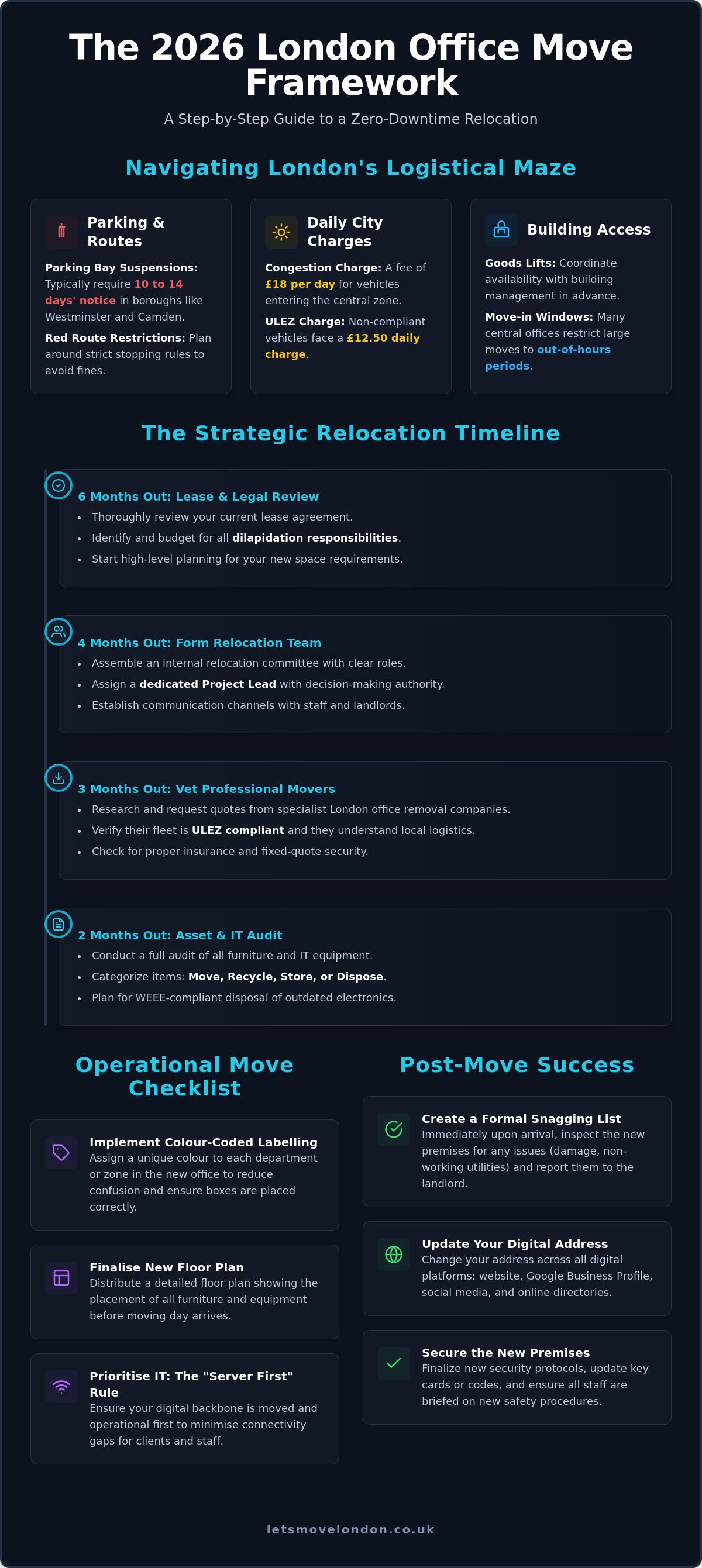
London's geography presents specific hurdles that can derail a move if ignored. Councils like Westminster and Camden typically require 10 to 14 days' notice to suspend parking bays for removals. Failing to secure these permits leads to heavy fines and delayed loading times. You must also coordinate with building management regarding 'Goods Lift' availability. Many central offices only permit heavy moves during out-of-hours windows to minimise disruption to other tenants. Verify that your chosen provider operates a 2026 LEZ-compliant fleet. With the daily ULEZ charge at £12.50 and the Congestion Charge at £18, non-compliant vehicles quickly inflate your relocation budget. Choose a metropolitan specialist who understands these borough-specific rules to ensure a smooth transition.
Phase 1: The Strategic Administrative Timeline
A successful transition begins long before the first crate is packed. For businesses planning small office removals london, the administrative phase is where you secure your budget and protect your legal interests. London's commercial property market is fast paced, so starting your timeline six months out isn't just helpful; it's essential for maintaining control over the process.
At the six-month mark, your priority is reviewing your current lease. Identify your dilapidation responsibilities immediately. Most London landlords require the space to be returned to its original state, and these costs can escalate if left to the last minute. By month four, you should form an internal relocation committee. Assign a dedicated project lead who has the authority to make quick decisions. When you hit the three-month milestone, start vetting office relocation London specialists who understand metropolitan logistics. Finally, at two months out, conduct a full audit of your furniture and IT equipment to decide what moves, what gets recycled, and what requires storage.
Building Your Relocation Team
Your internal team serves as the bridge between your staff and the professional movers. Assign specific roles such as an IT Lead to manage server migration, a Staff Liaison to handle internal queries, and a Logistics Coordinator to oversee the physical timeline. It's vital to maintain clear communication with landlords at both your current and future sites to avoid access disputes on moving day. You must also ensure your team understands employee rights during relocation to keep the transition legally compliant and morale high. Internal project management is the backbone of a move because it translates complex logistical needs into clear, operational reality for every department.
Auditing and Decluttering
Reducing your physical volume is the most effective way to lower relocation costs and speed up the process. Implement a clear desk policy early on to encourage staff to digitise paperwork and clear personal items. For sensitive archive files that aren't needed daily, utilising secure storage space in London UK keeps your new office clutter free while maintaining data security. Don't pay to transport furniture that won't fit your new floor plan. Donate or recycle surplus items to ensure your transit volume is as lean as possible. If you need help assessing your inventory, speaking to a professional moving team early can provide the clarity you need to streamline your move.
Phase 2: The Operational Office Move Checklist
Once the administrative groundwork is laid, your focus shifts to the physical execution of the move. For successful small office removals london, the operational phase is where precision prevents chaos. Start by finalising the floor plan of your new premises. Knowing exactly where each desk, printer, and server rack goes ensures that your removal team can place items correctly the first time. Implement a systematic labelling protocol, such as colour-coding by department or floor, to eliminate guesswork during the unloading process.
Order your moving boxes and packing materials at least four weeks in advance. This lead time allows you to begin packing non-essential archives and supplies without rushing. As you near the move date, schedule a 'Final Sweep' of your old premises. This thorough inspection ensures you've met all lease obligations and helps you avoid costly dilapidation penalties from your landlord. For more detailed advice on managing these final steps, visit our blog.
Packing Strategies for Professionals
Choosing the right materials is critical for protecting expensive business assets. While cardboard boxes are suitable for lighter items, consider plastic crate hire for sensitive documents and relocating IT infrastructure safely. Crates are stackable, waterproof, and provide superior protection for hardware. Don't forget to pack a 'First-Day Box' containing essentials like kitchen supplies, chargers, and basic stationery. This simple step ensures your team can function the moment they step into the new space. Some industry professionals report that hiring professional packing services can save up to 40% more time than staff-led efforts, allowing your employees to stay focused on their core roles.
Managing Staff and Morale
Transparency is the best tool for reducing relocation anxiety. Provide every employee with a 'Move Pack' that includes clear instructions for packing their personal space and a timeline of the transition. Hold weekly updates to address concerns and keep everyone informed of the progress. Establish clear boundaries regarding personal effects; ask staff to take personal items home or pack them into specific crates themselves. By separating personal belongings from company assets, you simplify the professional movers' task and ensure that nothing essential is misplaced during the transition. This clear division of responsibility keeps the operation moving swiftly and maintains a sense of order throughout the day.
Minimising Downtime: IT and Infrastructure Relocation
Maintaining this sense of order is equally vital when sourcing support staff for your new location; platforms like LetME are leading the way in connecting businesses with quality-assured personnel for cleaning and service roles through an intuitive mobile interface.
Moving a business in London isn't just about furniture; it's about data. For small office removals london, your digital infrastructure is the most vulnerable asset during a transition. Follow the 'Server First' rule: your digital backbone must be the first thing decommissioned at the old site and the first thing live at the new one. Scheduling your internet and phone line cut-over requires precision. Coordinate with your ISP at least 30 days in advance to ensure there's zero connectivity gap between buildings. If your systems go dark, your revenue stops, so treat this as the highest priority on your checklist.
Connectivity and Cloud Transitions
Hybrid work is the 2026 standard for metropolitan businesses. While your physical team is in transit, your remote staff must remain connected to cloud services. Test the new WiFi mesh and hardwired Ethernet points before the full team arrives. This proactive step prevents the Monday morning chaos where nobody can log on. Ensure your IT lead has remote access ready for staff who aren't on-site during the move. If your tech move is small but requires high-security transit, consider using a Professional Man and Van London for a dedicated tech-only shuttle. This keeps your most expensive assets separate from general office furniture.
Hardware Protection and Setup
High-value monitors and specialised tech require more than just bubble wrap. Use anti-static wrapping and dedicated tech crates to prevent static discharge or physical impact. When re-commissioning IT, try to mirror the old desk layout. This small detail helps staff settle in faster and reduces ergonomic complaints on their first day. For small office removals london, efficiency is found in the details. When you're ready to secure your technical transition, book your professional relocation team to ensure everything is handled with specialist care.
Decommissioning old hardware requires an ethical approach. Follow the Waste Electrical and Electronic Equipment (WEEE) regulations for the disposal of all redundant IT equipment. Data security remains paramount during this process. Ensure all hard drives are professionally wiped or destroyed before hardware leaves your control. Using a compliant partner for disposal isn't just good for the environment; it's a legal requirement for UK businesses. Check our blog for more tips on staying compliant during a commercial move.
Post-Move Success: Settling into Your New London Workspace
While establishing your presence in the UK capital is a major milestone, many growing businesses also look toward European hubs for expansion. For those seeking modern, turnkey workspace solutions in the Netherlands, JOIN ME flex office offers flexible office options in Amsterdam and Haarlem that match the high standards of a professional London setup.
The first 48 hours in your new premises determine the momentum of your business for the coming months. Start by creating a comprehensive 'Snagging List'. Walk through the entire office to identify any faults in lighting, plumbing, or connectivity immediately. For small office removals london, identifying these issues on day one ensures you can hold landlords or contractors accountable before they impact your daily workflow. Aim for a positive 'Welcome Day' for your staff. Stock the kitchen, ensure all desks are functional, and provide a clear orientation guide to help your team settle in without friction.
Once the physical transition is complete, shift your attention to your digital footprint. Update your business address on your website, email signatures, and Google Business Profile to prevent client confusion or missed deliveries. Finally, conduct a formal debrief with your London removals team. Reviewing the inventory against the initial fixed quote ensures all items arrived safely and provides a clean, professional closure to the relocation project.
Administrative Finalisation
Don't let administrative loose ends drain your productivity after the move. Notify your primary suppliers and clients of the physical move at least a week before you arrive to ensure service continuity. Arrange for professional end-of-tenancy cleaning at your old site to secure your full deposit return. Most importantly, update your business rates and council tax records with the new London borough. Each borough operates on different valuation scales; failing to register promptly can lead to backdated charges that disrupt your cash flow. For more guidance on managing your post-move tasks, visit our blog.
The Logical Conclusion: Why Professionals Matter
Attempting DIY small office removals london often results in hidden expenses that far outweigh the cost of a professional service. From the £18 daily Congestion Charges to the risk of damaging high-value IT hardware, the metropolitan environment is unforgiving to the unprepared. Professional movers provide more than just physical labour. They offer the logistical intelligence required to navigate London's constraints with zero downtime and total peace of mind. We handle the complex logistics of the city so you can focus on running your business. When you're ready for a seamless, secure transition to your new workspace, request a commercial relocation quote from our expert team today.
Secure Your Business Growth with a Seamless Move
Your move to a new London office is a strategic upgrade for your operations. A successful transition depends on a proactive approach that balances administrative diligence with technical precision. By adhering to a clear timeline and prioritising your digital infrastructure, you eliminate the risk of operational downtime. Executing small office removals london shouldn't be a gamble with your productivity; it's an opportunity to refine your workspace and energise your team.
London's unique logistical landscape requires a partner with specialist metropolitan knowledge. From navigating borough-specific parking rules to ensuring ULEZ compliance, we handle the physical transition so you can focus on your core business. Our dedicated team prioritises minimal business disruption, providing comprehensive packing and storage solutions that safeguard your assets. We don't just move furniture; we provide the security and reliability your organisation needs to thrive in its new location.
Take the stress out of your next relocation. Request Your Fixed-Quote Commercial Relocation Assessment to secure your peace of mind and lock in your moving date. We're ready to help you settle into your new workspace with total confidence and professional support.
Frequently Asked Questions
How much notice do I need to give for small office removals in London?
When planning small office removals london, you should aim to book your service at least 6 to 8 weeks in advance for a medium-sized space. For smaller moves, a minimum of 4 weeks is recommended to ensure availability. This lead time is essential for coordinating parking suspensions with councils like Westminster or Camden, which require up to 14 days' notice. Early booking also allows you to secure fixed-quote pricing.
Can an office move take place over a weekend to avoid downtime?
Yes, weekend moves are a standard practice for London businesses looking to achieve zero client-facing downtime. Moving on a Saturday or Sunday avoids the weekday Congestion Charge and minimises disruption to staff workflow. Many managed buildings in Central London actually mandate that removals occur outside of regular business hours. We recommend checking with your new building manager for specific weekend access hours and goods lift availability.
Do I need insurance for an office move, or is it covered by the movers?
You must ensure your chosen removal company provides comprehensive Goods in Transit and Public Liability insurance. While professional movers carry their own coverage, you should verify the policy limits to ensure they match the value of your assets. Many managed office buildings in London require proof of insurance before they allow removal teams on-site. It's also wise to check if your existing business contents insurance covers items during transit.
How do I handle the disposal of old office furniture in an eco-friendly way?
You should prioritise recycling and reuse through licensed waste carriers to comply with UK environmental regulations. Many specialist firms focus on the responsible disposal of unwanted furniture, often donating usable items to local charities or schools. For electrical items, you must follow WEEE regulations to ensure data security and environmental safety. Choosing a partner with a clear sustainability policy helps your business reduce its carbon footprint during the transition.
What is the average cost of an office move for a small London business?
The cost of small office removals london varies significantly based on the volume of items, the distance between sites, and the complexity of the IT setup. Factors such as parking bay suspensions, Congestion Charges, and the need for professional packing services will also influence the final quote. We provide fixed-quote assessments to give you total price transparency. This approach ensures there are no hidden fees or unexpected costs on moving day.
How do I manage parking permits for moving vans in Central London?
You must apply for a parking bay suspension directly through the relevant London borough council. Most councils, including the City of London and Islington, require 10 to 14 days of notice to process these applications. If your office is on a Red Route, you'll need to coordinate with Transport for London (TfL), as loading is strictly prohibited during peak hours. Professional movers can often advise on the specific permit requirements for your street.
Will removal companies help with the packing of sensitive IT equipment?
Professional removal teams offer specialised packing services for high-value IT infrastructure and hardware. This includes the use of anti-static wrapping and reinforced tech crates to prevent damage during transit. While staff can handle personal effects, it's safer to let experts manage servers and monitors. We recommend a "Server First" approach to ensure your digital backbone is decommissioned and re-commissioned with minimal disruption to your hybrid work environment.
What happens if our new office isn’t ready on move day?
If your new premises aren't ready, you should utilise secure storage options to hold your furniture and equipment safely. Short-term storage provides a flexible buffer if building works are delayed or lease signatures are held up. This prevents the stress of a failed move and keeps your assets protected in a climate-controlled environment. Once your new workspace is cleared for entry, your removal team can complete the final delivery and setup.


Comments