
Furniture Storage in London: The 2026 Complete Guide to Protecting Your Belongings
- 2 days ago
- 11 min read
In London, the greatest risk to your velvet sofa or antique wardrobe isn't the storage facility itself, but the journey through the city's congested streets and the preparation you do before the unit doors even open. Many residents discover that even the most secure furniture storage unit cannot fix poor packing or the moisture damage that starts during a rainy transit. You likely worry about damp ruining your upholstery or the stress of navigating a heavy van through 2026 London traffic. It's a valid concern. Nobody wants to find their belongings damaged after paying for professional care.
We understand that moving items into storage is often a high-stakes transition. This guide will help you master the art of furniture storage by providing expert preparation tips and specific logistical advice to ensure your items remain in pristine condition. You'll gain a clear plan for packing and protecting every surface, from delicate glass to heavy oak. We also explain the differences between various storage types and how to avoid the confusion of hidden costs and unit sizing. Follow these steps to secure a reliable partner for the heavy lifting and achieve total peace of mind.
Table of Contents
Why You Need Professional Furniture Storage in London
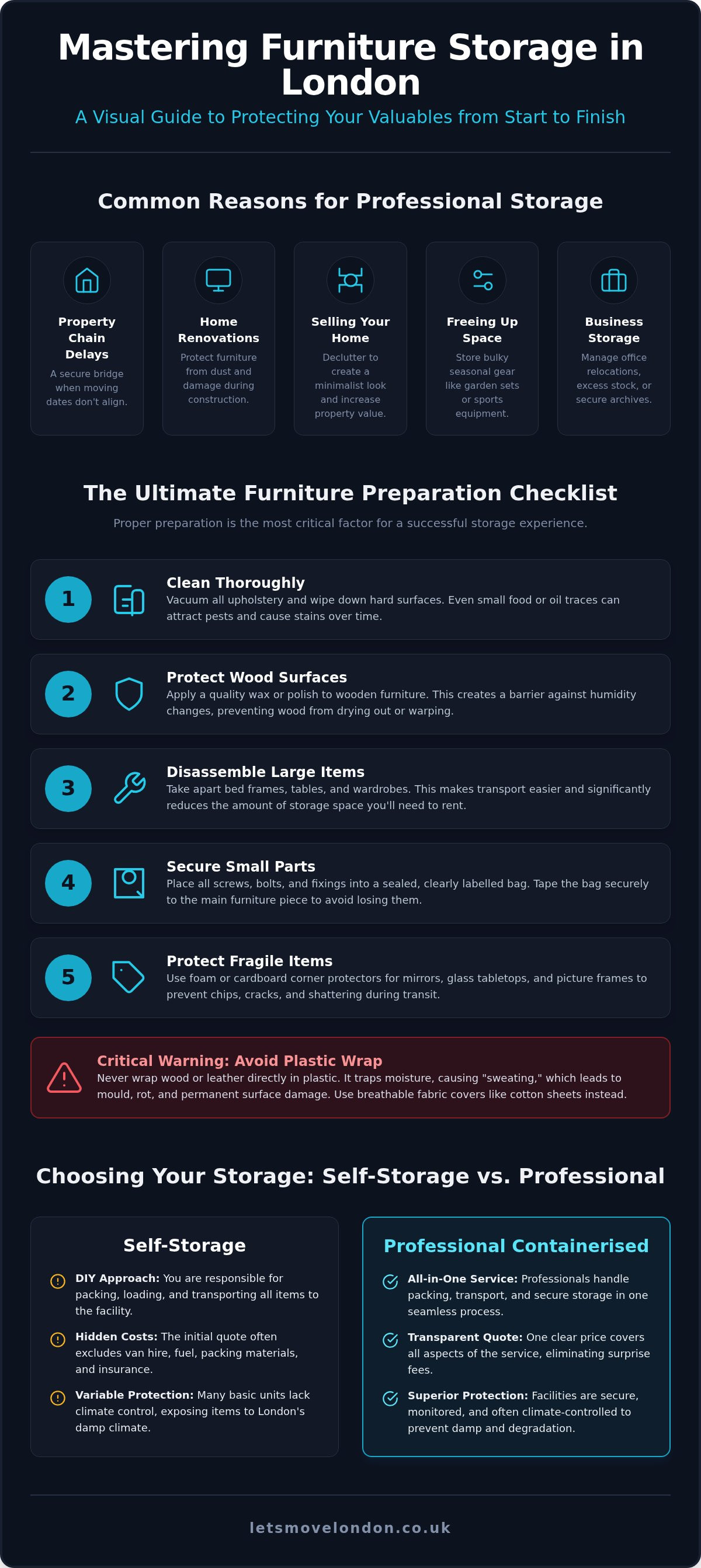
Moving in London is notoriously unpredictable. Property chains often stall at the last minute, leaving you with a house full of items and nowhere to put them. Professional furniture storage provides the essential buffer needed to manage these delays without losing your deposit or your sanity. Beyond moves, renovations like basement conversions or kitchen extensions require clearing rooms to protect your investments from dust and debris. Staging a home for sale also demands a minimalist look; removing bulky items can significantly increase your property’s perceived value. Even seasonal shifts matter. Storing garden sets or bulky winter sports gear frees up vital square footage in cramped city flats.
The Challenges of Storing Furniture in the Capital
Space is the ultimate premium in London. Cluttered hallways and stacked spare rooms create a stressful living environment. While you might consider a DIY approach, a "self-move" often incurs hidden costs like van hire, fuel, and the high price of your own time. Understanding what self-storage is helps you see the value, but professional facilities offer better protection. London’s damp climate is a silent threat. Non-regulated spaces, such as damp garages or unheated sheds, allow mould to take hold in upholstery and cause wood to warp. Professional units maintain stable environments to prevent this degradation.
Commercial Storage for London Businesses
For businesses, storage is a strategic tool. During a strategic relocation, you need a secure place for desks, chairs, and tech while the new office is fitted out. Retailers use furniture storage to manage seasonal stock overflows without committing to long-term warehouse leases. High-value equipment and physical archives require monitored, secure environments that typical office basements simply cannot provide. We ensure your commercial assets remain protected and accessible. This allows you to focus on your operations rather than the logistics of physical space management.
How to Prepare Your Furniture for Long-Term Storage
Preparation is the single most important factor in a successful furniture storage experience. London's humidity levels fluctuate significantly throughout the year, which can lead to mould growth on untreated upholstery or warped wood. You must clean every surface thoroughly before packing. Vacuum fabric items and wipe down hard surfaces with appropriate cleaners. Even a small amount of food residue or skin oil can attract pests or lead to permanent staining over several months.
Apply a layer of high-quality wax or polish to wooden furniture. This acts as a protective barrier, preventing the grain from drying out and cracking during dry spells or absorbing excess moisture during wet periods. Disassemble large items like bed frames, wardrobes, and dining tables. This not only makes the pieces easier to transport through narrow London hallways but also significantly reduces the floor space you need to rent. Always use breathable fabric covers, such as cotton sheets, instead of plastic wrap for long-term protection. This allows air to circulate, preventing the moisture trap that often ruins leather and wood.
Step-by-Step Packing Guide
Never wrap leather or wood directly in plastic. It's a common mistake that leads to "sweating," which causes peeling, rot, and permanent surface damage. Instead, use professional moving boxes for smaller components, cushions, and hardware. Place all screws, bolts, and fixings in a clearly labelled, sealed bag and tape it securely to the underside of the relevant furniture piece. This simple inventory management step saves hours of frustration during reassembly. Our team can provide a professional packing service if you want to ensure every item is secured to industry standards.
Protecting Fragile and High-Value Items
Use foam or cardboard corner protectors for mirrors, pictures, and glass-fronted cabinets to prevent chips and cracks. For high-value antiques, the benefit of professional packing cannot be overstated; expert handlers use specialized materials to cushion delicate joints. When entering into a storage agreement, remember that consumer rights in the UK provide a framework of protection for the services you receive, so ensure your provider is transparent about their care standards. Climate-controlled storage is the gold standard for protecting sensitive electronics from internal corrosion and component failure. If you're storing high-tech office equipment or vintage audio gear, this regulated environment is essential for long-term preservation.
Choosing the Right Storage Type: Self-Storage vs. Professional Containerised
Selecting the right furniture storage model depends on how often you need to reach your belongings and your total budget. London offers two primary paths: self-storage and professional containerised storage. Each serves a distinct purpose. Self-storage units provide the highest level of flexibility. You can visit your unit frequently to retrieve or add items. This is ideal for residents who need a "spare room" for smaller, rotating items. However, the physical effort of loading and stacking falls entirely on you. You must manage the logistics of getting your items from the pavement into the unit.
Pros and Cons of Self-Storage Units
The main advantage of self-storage is immediate access. You hold the key and control the space. But this convenience comes with a "London premium" on pricing, especially in central boroughs. Costs for units in Central London are significantly higher than those in outer areas. If you only have a few bulky pieces, hire a man and van service to handle the transport and heavy lifting. This saves you the stress of navigating city traffic in a rented vehicle while ensuring your items arrive safely at the facility.
The Benefits of Professional Containerised Storage
For long-term house moves or renovations, containerised storage is the most secure and cost-effective option. We load your belongings into large wooden containers directly at your property. Once packed, we seal the containers and transport them to a secure, monitored warehouse. This method involves far less handling than self-storage. Because the items are loaded once and remain sealed until delivery, the risk of accidental damage is greatly reduced. It is also more affordable for long-term needs because you aren't paying for the overhead of a walk-in retail facility.
Security is paramount regardless of the type you choose. Professional facilities should meet Self Storage Association UK (SSA UK) standards, including 24-hour CCTV monitoring, secure perimeters, and advanced fire detection. Insurance is another critical factor. Don't assume your standard home insurance covers items kept off-site; most policies specifically exclude furniture storage. You must have a dedicated insurance plan in place. Most storage operators offer these plans directly. Always verify that the coverage limits reflect the full replacement value of your furniture to ensure total peace of mind.
Navigating London Logistics: Getting Your Furniture to Storage
Moving items to a facility involves more than just a van and effort. You must account for London's complex regulatory environment. Parking is the first hurdle. Most boroughs require you to book a parking "suspension" to guarantee space outside your property. If you don't secure this in advance, you risk heavy fines or being unable to load your items at all. Each council has different lead times, often requiring up to 10 working days of notice. Failing to plan for these logistics can double your moving time and lead to significant stress.
Financial charges also apply. The Congestion Charge and Ultra Low Emission Zone (ULEZ) remain active daily throughout 2026. Professional removals in London use compliant vehicles to avoid these penalties, which are often overlooked in DIY budgets. Beyond the paperwork, physical access is a major challenge. Victorian terraces and modern apartment blocks often feature narrow stairwells or lack lifts. Handling heavy wardrobes or sofas in these spaces is dangerous for amateurs. Choosing professional help is safer than a DIY van hire, as experts bring the right equipment for these metropolitan obstacles.
Calculating the Right Storage Size
Choosing the correct unit size prevents you from paying for empty air. Units typically range from 10 sq ft lockers to large 200 sq ft rooms. To visualise the space, consider that a standard 3.5-tonne Luton van usually fills a 60 to 75 sq ft furniture storage unit. Create a "stacking plan" before you arrive. Place the heaviest, most durable items at the bottom to create a stable base. This allows you to maximise vertical space and potentially rent a smaller, cheaper unit than you initially expected.
Safety and Transit Protection
Protection begins the moment an item is lifted. We use heavy-duty transit blankets and industrial-strength ties to secure every piece within the vehicle. Professional loading is vital because it prevents "settling" damage. This occurs when items shift and rub against each other during transit through London's stop-start traffic. Our team handles high-value relocations with specific care for fragile surfaces and bulky frames. If you want a damage-free experience, book our integrated move and store service to handle the entire transition with professional precision.
Stress-Free Storage Solutions with Let’s Move London
Our integrated "Move and Store" service removes the friction from your transition. We handle every detail from your front door to our secure facility. You don't need to coordinate multiple vendors or worry about the physical loading. Our team arrives, packs your items if required, and transports them directly into our secure units. This door-to-door approach saves time and reduces the risk of damage during multiple handling stages. By consolidating the process, we provide a seamless experience that prioritizes your peace of mind.
Transparency is the foundation of our service. London logistics often involve hidden costs, but we provide fixed-quote clarity for residential projects. You receive a comprehensive price that accounts for the specific challenges of your move, ensuring no surprises when the final bill arrives. Whether you are a homeowner clearing space or a business manager coordinating a move, our flexible options adapt to your specific timeline. The reassurance of a professional removal team is invaluable. Our staff are trained to handle high-value assets and bulky items with organized competence. We treat your property with the respect it deserves, using industry-standard protection for every surface.
The Let’s Move London Difference
We possess deep local expertise across every London postcode. From the narrow streets of Chelsea to the modern developments in Canary Wharf, we understand the specific access requirements of each neighbourhood. For complex relocations, we provide dedicated account management to ensure every phase of the project remains on track. Our team operates as hardworking metropolitan specialists. We are quietly competent and focused on physical efficiency. We don't just move boxes; we manage the logistical burden so you don't have to.
Ready to Clear the Clutter?
Getting started is straightforward. We provide an accurate volume-based quote to ensure you only pay for the furniture storage space you actually use. Before move day, ensure all items are clearly identified and that we have confirmed access for our vehicles. Clear communication regarding building access helps us maintain our brisk and logical workflow. This preparation ensures we can complete the loading process quickly and safely. Get your free, no-obligation furniture storage quote today and experience a secure, stress-free transition.
Secure Your Belongings for the Long Term
Mastering furniture storage in the capital requires a combination of meticulous preparation and regional logistical knowledge. You now have the tools to protect your investments from environmental damage and navigate the complexities of London's 2026 transport regulations. By choosing a partner that understands the nuances of metropolitan access and parking suspensions, you eliminate the risks associated with DIY transitions. We specialize in bridging the gap between your current home and your next destination with quiet, organized competence.
As London metropolitan logistics specialists, we provide a 5-star rated professional team to handle every heavy lift with care. Our fully insured removal and storage services ensure your property remains protected from your front door to our secure facility. We prioritize your peace of mind through physical efficiency and transparent, fixed-quote pricing. Don't let the stress of moving bulky items overwhelm your plans. Request Your Fixed-Quote Furniture Storage Plan today and enjoy a seamless, damage-free experience. Your belongings are in safe hands.
Frequently Asked Questions
How much does furniture storage cost in London?
Monthly costs for a storage unit in London typically range from £40 to £220 depending on the size and location of the unit. A standard 50 sq ft space usually costs between £150 and £220 per month. Prices are significantly higher in Central London compared to Outer London boroughs. You should also budget for additional costs like professional packing and transit insurance to ensure your items remain fully protected throughout their stay.
Can I store my sofa in a garage instead of a storage unit?
Storing a sofa in a garage is risky due to unregulated humidity and temperature levels. London's damp climate often leads to mould growth and permanent damage to upholstery in non-specialised spaces. Professional furniture storage facilities maintain stable environments and offer pest control measures that domestic garages lack. Investing in a secure unit prevents the high cost of replacing ruined furniture later and provides essential peace of mind.
How do I protect my wooden furniture from cracking in storage?
Apply a high-quality furniture wax or polish to all wooden surfaces before moving them into storage. This creates a protective barrier that prevents the wood from drying out and cracking or absorbing excess moisture. Avoid wrapping wood directly in plastic, as this traps moisture and causes rot. Use breathable cotton covers to allow air circulation while protecting the finish from dust and light exposure during the transition.
Do I need my own insurance for furniture storage?
Yes, insurance is a standard requirement for all reputable storage facilities in the UK. Most home insurance policies specifically exclude items kept in off-site storage units. You must verify your coverage limits and ensure they reflect the full replacement value of your belongings. Most operators provide specialized insurance plans that cover transit and storage risks, offering you the necessary legal and financial reassurance for your assets.
What is the best way to pack a mattress for long-term storage?
Use a heavy-duty mattress bag to seal the item against dust and moisture. Ensure the mattress is completely dry before packing to prevent internal mould growth. While storing a mattress on its side saves space, long-term storage is best done flat to prevent the internal springs or foam layers from shifting. Avoid placing heavy items on top of the mattress, as this causes permanent indentations and structural damage.
How far in advance should I book a storage removal service in London?
Aim to book your storage removal service at least two to four weeks in advance. This lead time is critical for securing parking suspensions from your local London council, which often requires ten working days of notice. Early booking ensures you secure your preferred dates and allows our team to conduct a volume assessment. This organized approach prevents last-minute logistical delays and ensures a brisk, logical transition to your unit.
What items are prohibited from being stored in your facilities?
You cannot store hazardous, illegal, or perishable items in any professional facility. This includes firearms, explosives, flammable liquids, and illegal substances. Perishable goods like food and living items such as plants or animals are strictly prohibited. These rules comply with UK safety regulations and help maintain a clean, pest-free environment for all clients. Always check the specific prohibited items list before your scheduled move day begins.
Is containerised storage more secure than self-storage?
Containerised storage offers enhanced security because it significantly reduces the number of times your items are handled. Once loaded into a wooden container at your property, the unit is sealed and only reopened upon delivery. This process minimizes the risk of accidental damage or unauthorized access. While self-storage offers flexibility, containerised furniture storage is often the superior choice for long-term security and cost-efficiency during major residential or commercial moves.


Comments